
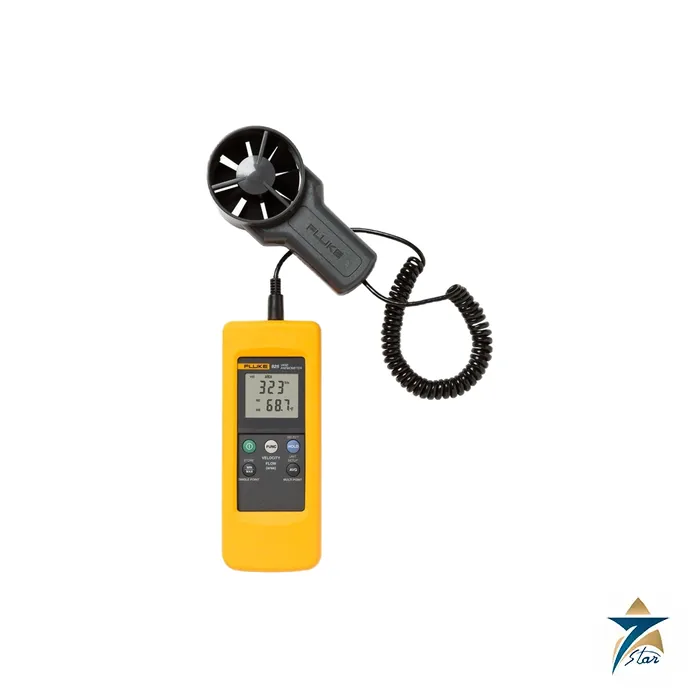
The Fluke 925 is a handheld vane anemometer for measuring air velocity, air volume flow and air temperature at grilles, diffusers, duct openings and fan outlets. It combines a separate rotating vane sensor head, connected by a coiled cable, with a compact meter that has a dual 4-digit LCD showing velocity or flow on the upper line and temperature on the lower line. With MIN, MAX and average functions, multi-point averaging of up to eight readings and a data hold button, it gives HVAC technicians and commissioning engineers a straightforward tool for airflow balancing and troubleshooting.
Seven Star LLC supplies the Fluke 925 to HVAC contractors, facility maintenance teams and plant engineers across the Sultanate of Oman and the GCC. Our team in Muscat provides engineering support, and we can supply the anemometer together with other Fluke test tools for commissioning and maintenance programmes.
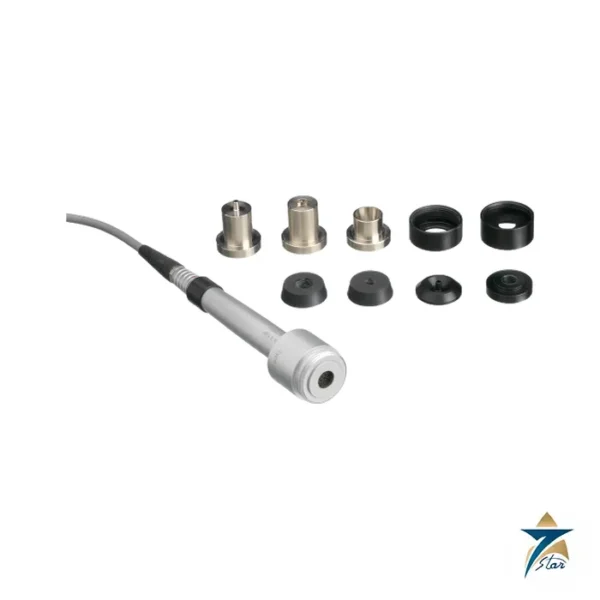
A vane anemometer converts air movement into rotation. In the Fluke 925, conventional angled vane arms run on a low-friction ball bearing inside a 70 mm diameter sensor head; as air passes through, the vane turns at a speed proportional to the air velocity, and the meter converts that rotation into a reading in metres per second or feet per minute. A precision thermistor in the probe measures air temperature at the same time, so supply-air temperature and velocity can be checked together at a diffuser.
Volume flow is calculated rather than measured directly. The user enters the free area of the duct or grille in square metres or square feet, and the Fluke 925 multiplies velocity by area to display flow in cubic metres per second (CMS) or cubic feet per minute (CFM). The user manual gives the governing equations: CMS equals air velocity in m/s multiplied by area in m², and CFM equals air velocity in ft/min multiplied by area in ft². As general engineering guidance, a vane head averages velocity over its whole face, which is why it works well at grilles and large openings, while a hot-wire or pitot probe is usually preferred inside small ducts.
The main instrument measures 181 × 71 × 38 mm and the complete kit, including battery and sensor, weighs 363 g. The meter is powered by a single 9 V alkaline battery (IEC 6LR61) with a stated battery life of 100 hours, and an automatic power-off function puts the meter to sleep after 20 minutes to conserve energy; this can be bypassed for long sessions. If the sensor is disconnected or inoperable, the meter beeps, shows error message E6 and shuts down, which prevents false zero readings.
Five buttons control the Fluke 925: ON/OFF, FUNC to toggle between velocity, free area and volume, HOLD to capture a reading or set a digit, MIN MAX to view minimum, maximum or start recording, and AVG to display the average of stored measurements. Users can switch between U.S. units (°F, ft/min, CFM) and metric units (°C, m/s, CMS) at power-up. The operating temperature is 0 to 50 °C with a maximum of 80 % RH, and the meter complies with IEC 61326-1 (portable) and CISPR 11 Group 1, Class A for electromagnetic compatibility.
The practical features of the Fluke 925 that matter most during HVAC testing are listed below.
In Oman and the GCC, where cooling is a critical load for almost every building, the Fluke 925 is used to balance supply and return air in offices, malls, hotels, hospitals and residential towers, and to verify that AHUs and FCUs deliver their design airflow after installation or filter changes. Facility teams use it during preventive maintenance to detect blocked filters or failing fans, and commissioning engineers use the multi-point average to traverse large grilles. In industrial sites such as substations, MCC rooms, control buildings and battery rooms at oil and gas, power and desalination facilities, it helps confirm ventilation rates and pressurisation airflow, and in the Sohar and Salalah free zones it supports cleanroom-adjacent, warehouse and production ventilation checks.
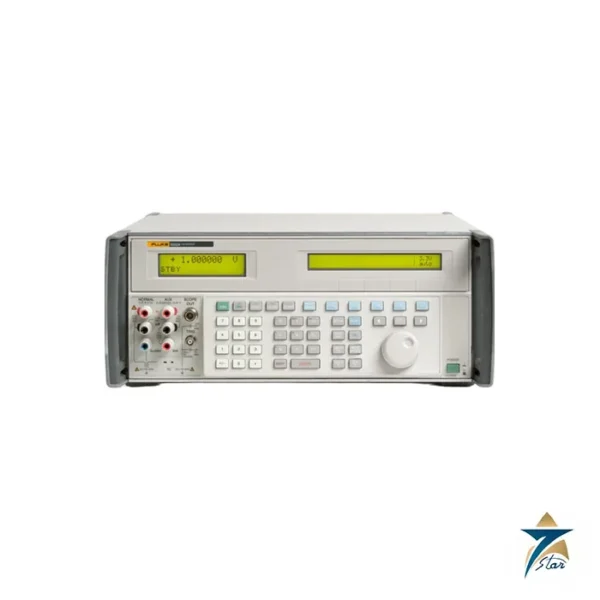
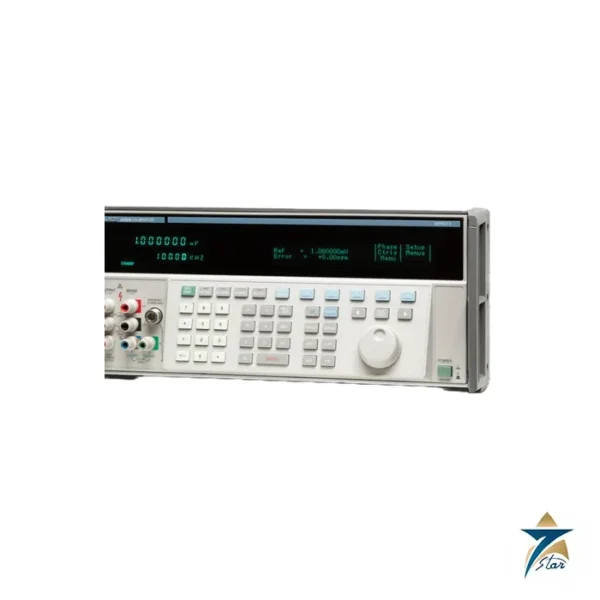
The Fluke 925 is often used together with other portable instruments. A thermal imager such as the FLIR E96 advanced thermal imaging camera quickly locates poorly performing coils or duct leaks, a testo 350 portable flue gas analyzer covers combustion checks on boilers and burners, and laboratories maintaining reference equipment may also use the Fluke 9640A RF reference source. Seven Star LLC supplies these tools to customers in Muscat and throughout the region.
The values below for the Fluke 925 are taken from the Fluke 925 Vane Anemometer Users Manual (PN 4971088, Rev. 2).
| Parameter | Specification |
|---|---|
| Model | Fluke 925 Vane Anemometer |
| Air velocity range and accuracy (m/s) | 0.40 to 10.00 m/s: ±0.5 m/s; 10.00 to 25.00 m/s: ±0.75 m/s; resolution 0.01 m/s |
| Air velocity range and accuracy (ft/min) | 80 to 1965 ft/min: ±100 ft/min; 1965 to 4900 ft/min: ±150 ft/min; resolution 1 ft/min |
| Air flow (CMS) | 0.01 to 99.99 m³/s, resolution 0.01; area 0 to 9.999 m² |
| Air flow (CFM) | 1 to 9999 ft³/min, resolution 1.0; area 0 to 9.999 ft² |
| Air temperature | 0 to 50 °C (32 to 122 °F), resolution 0.1 °F/°C, accuracy ±0.8 °C (±1.5 °F) |
| Display | Dual 4-digit (9999 count) LCD |
| Sensors | Angled vane arms with low-friction ball bearing; precision thermistor |
| Memory functions | MIN/MAX; average single point (up to 2 hours) or multi-point (up to 8 readings); data hold |
| Auto power off | After 20 minutes, with bypass |
| Operating conditions | 0 to 50 °C, max. 80 % RH |
| Power supply | 9 V alkaline battery (IEC 6LR61), approx. 100 hours |
| Dimensions | Meter 181 × 71 × 38 mm; sensor head diameter 70 mm |
| Weight | 363 g including battery and sensor |
| EMC | IEC 61326-1 (portable); CISPR 11 Group 1, Class A |
As general field practice, hold the vane head square to the airflow and keep it steady for a few seconds before reading, because an angled head under-reads. For a grille or large duct face, divide the area into a grid and use the multi-point average to combine readings into one averaged value, then enter the free area rather than the gross face area to obtain realistic flow. Note that the temperature range of the instrument is 0 to 50 °C, so very hot exhaust streams are outside its intended use.
To request a formal quotation for the Fluke 925, contact the Seven Star LLC test and measurement team with your quantity and any companion tools required. We provide engineering support in Muscat, can share the manufacturer user manual for your records, and support HVAC contractors and facility owners throughout Oman and the GCC.
Browse Fluke products by category: Portable Test & Measurement.
Choose the option that best fits your needs to get the fastest response from our team.
Automatically fill the RFQ form with this product's details for a faster process.
Manually enter multiple part numbers, specific brands, or custom requirements.












Reviews
There are no reviews yet.