
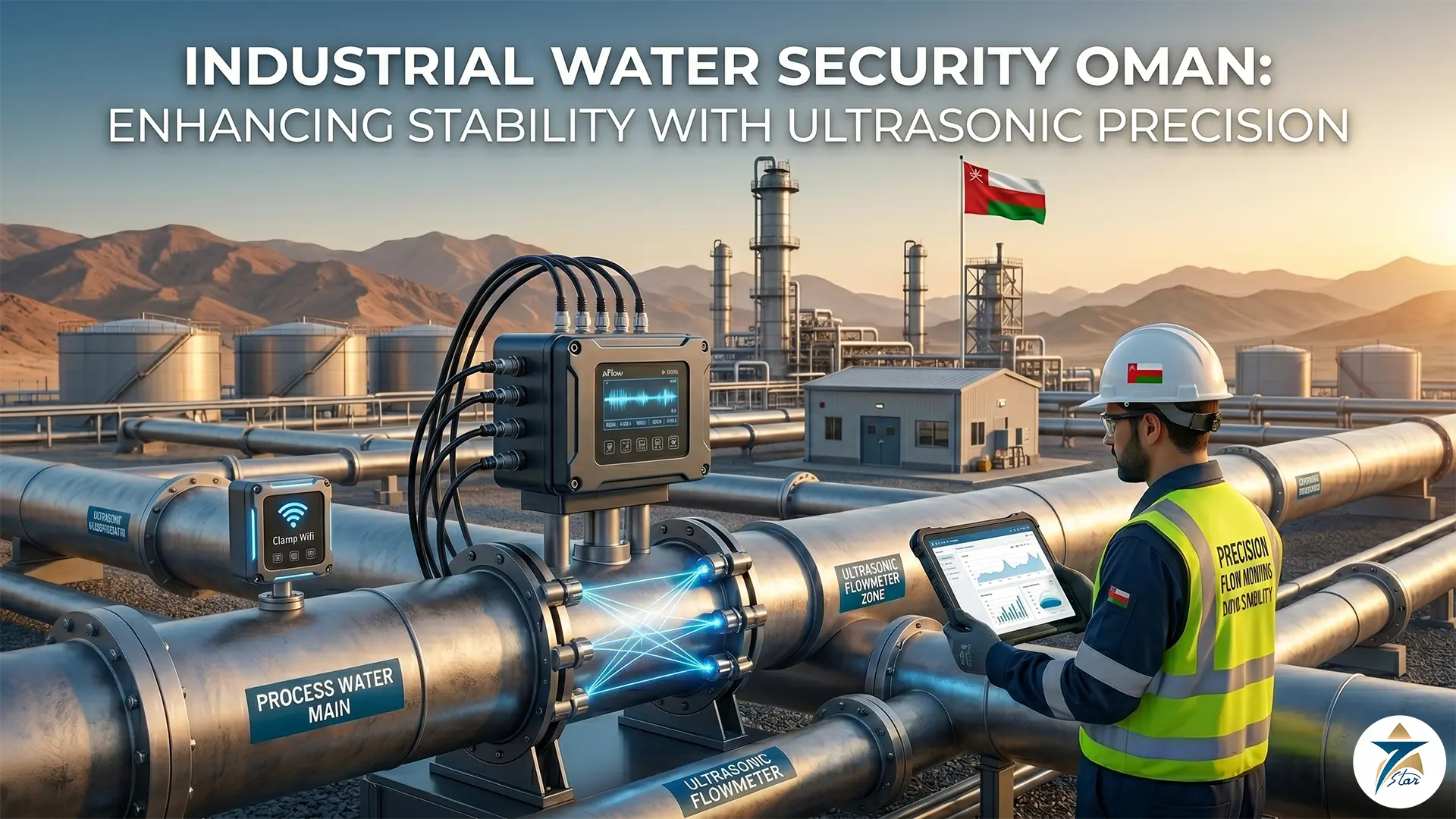






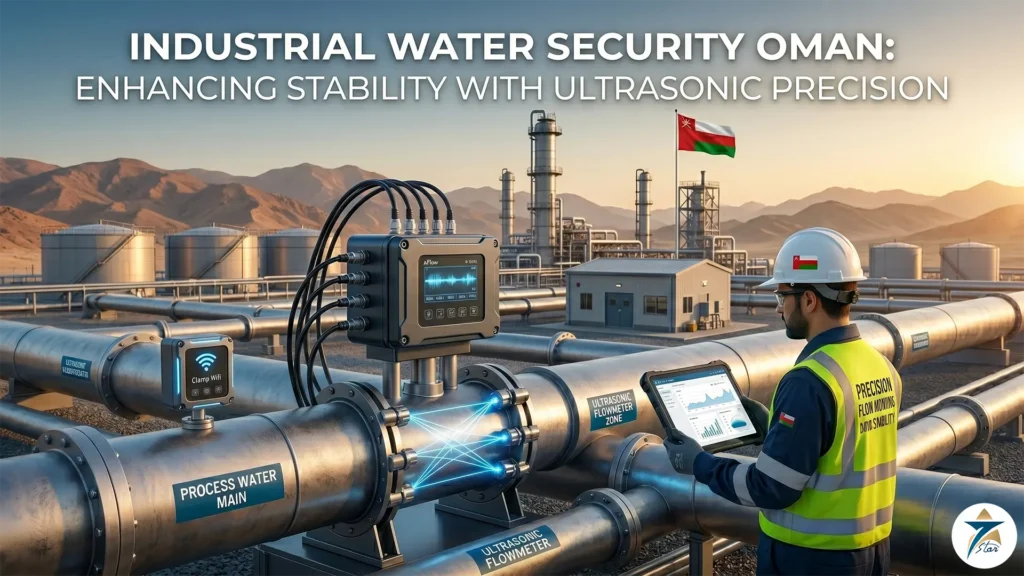





Achieving robust Industrial Water Security Oman is no longer just a technical goal—it is a national strategic necessity. As the Sultanate accelerates toward the objectives of Oman Vision 2040, the ability to manage, monitor, and protect water resources has become a top priority for every industrial facility and desalination plant in the region.
To guarantee Industrial Water Security Oman, engineers are shifting away from traditional, high-maintenance meters toward advanced non-invasive ultrasonic flow measurement.
In a desert climate, every drop of processed water represents significant energy and financial investment. Industrial Water Security Oman starts with knowing exactly how much water is moving through your system at any given second.
A major threat to Industrial Water Security Oman is “Non-Revenue Water” caused by undetected leaks in aging infrastructure.
Modernizing your infrastructure is the most effective way to ensure long-term Industrial Water Security Oman. Unlike mechanical meters that corrode in harsh environments, pFlow’s clamp-on sensors offer:
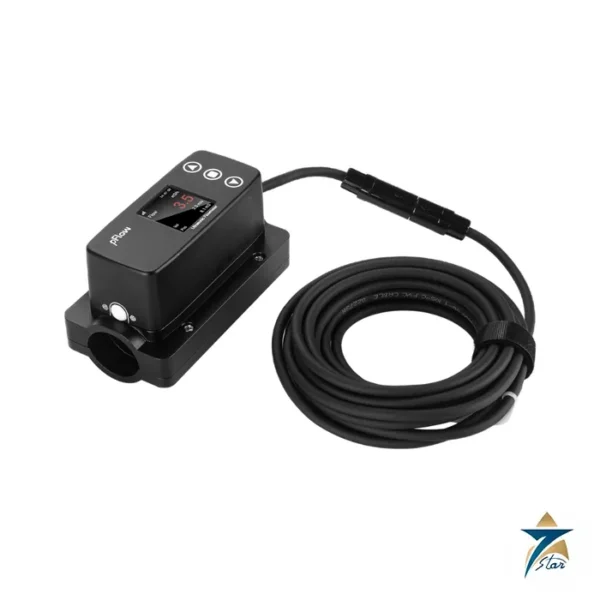
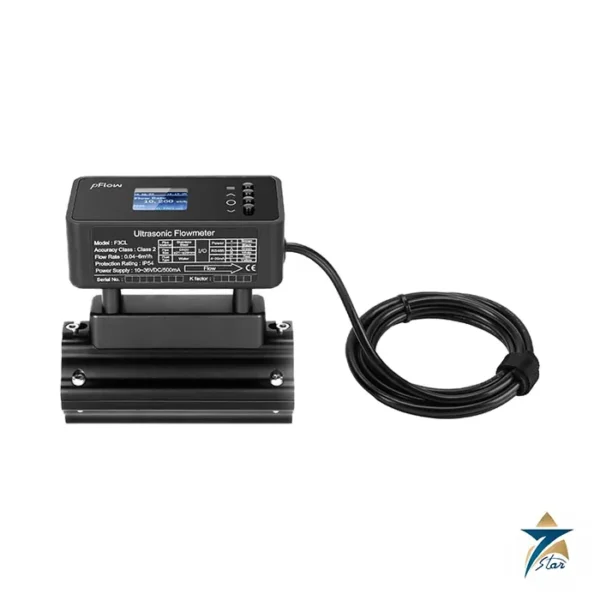
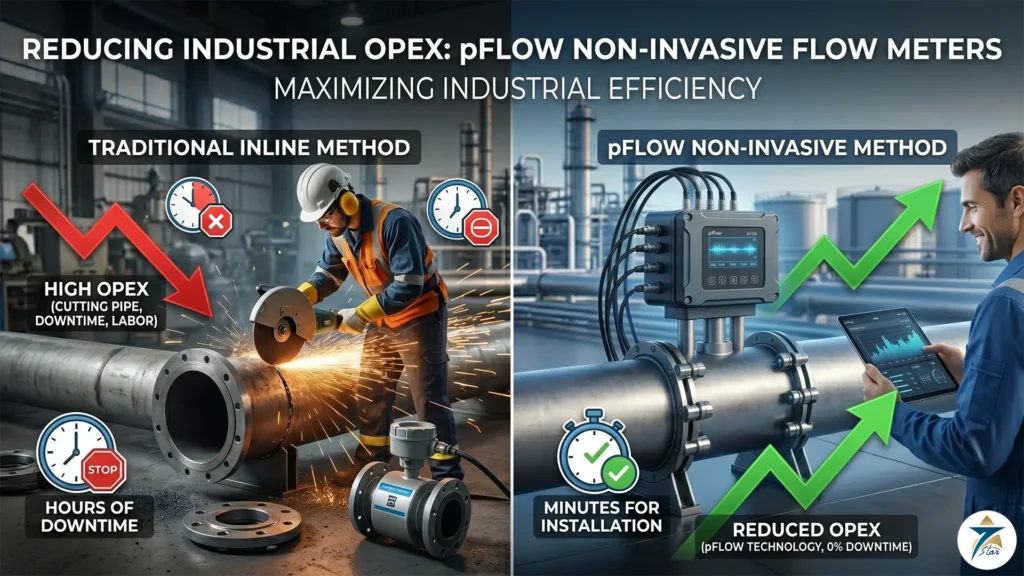
Clamp-on ultrasonic flowmeters measure flow without any contact with the water. Two transducers are fixed to the outside of the pipe and take turns sending ultrasonic pulses to each other through the pipe wall and the liquid. A pulse travelling with the flow arrives slightly earlier than one travelling against it. The meter measures this very small time difference, which is proportional to the average flow velocity, and combines it with the pipe dimensions to calculate volumetric flow.
Because nothing is inserted into the pipe, there is no pressure loss, no wetted part to corrode or scale, and no leak path. This makes the technology well suited to seawater intakes, brine lines and treated water networks, where corrosion and hygiene are constant concerns.
Reliable flow data supports decisions at every stage of the industrial water cycle:
Leak detection starts with a water balance. By installing meters at the boundaries of a network or plant area (an approach often called district metering), operators can compare the water entering a zone with the water legitimately used within it. A persistent difference, especially one that shows up during low-demand periods such as night-time, points to leakage or unmetered use.
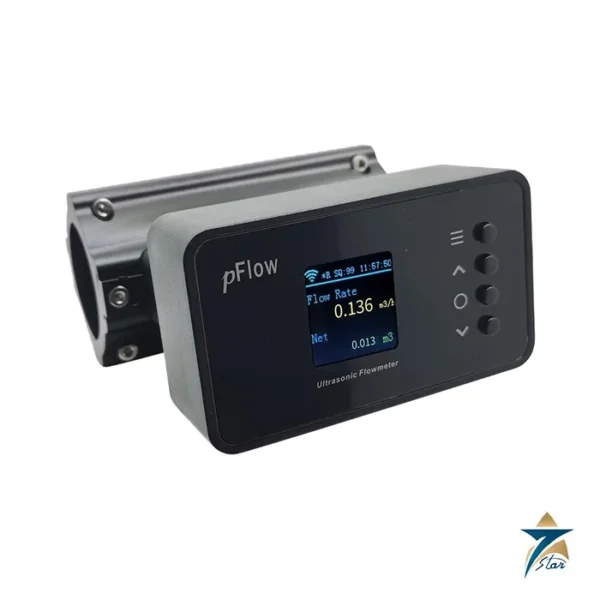
Clamp-on meters make this practical on existing infrastructure because they can be installed without interrupting supply. A portable meter such as the pFlow P118i portable ultrasonic flowmeter can be moved between locations to carry out surveys, while permanent meters provide continuous data for trend analysis. Industrial water security in Oman depends on this kind of continuous visibility, rather than on occasional manual readings.
Flow is only part of the picture. A complete monitoring strategy usually includes:
To get dependable readings from clamp-on meters in the region’s conditions:
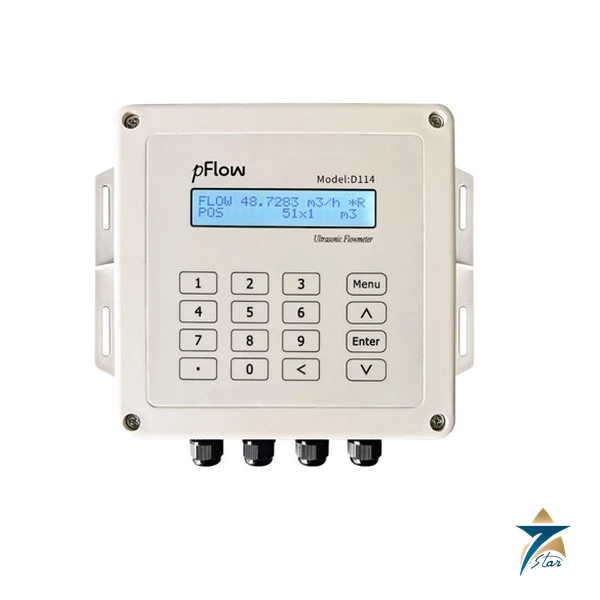
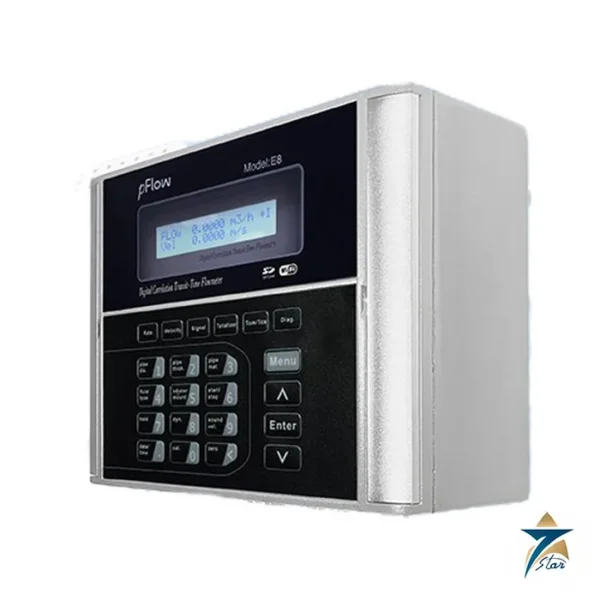
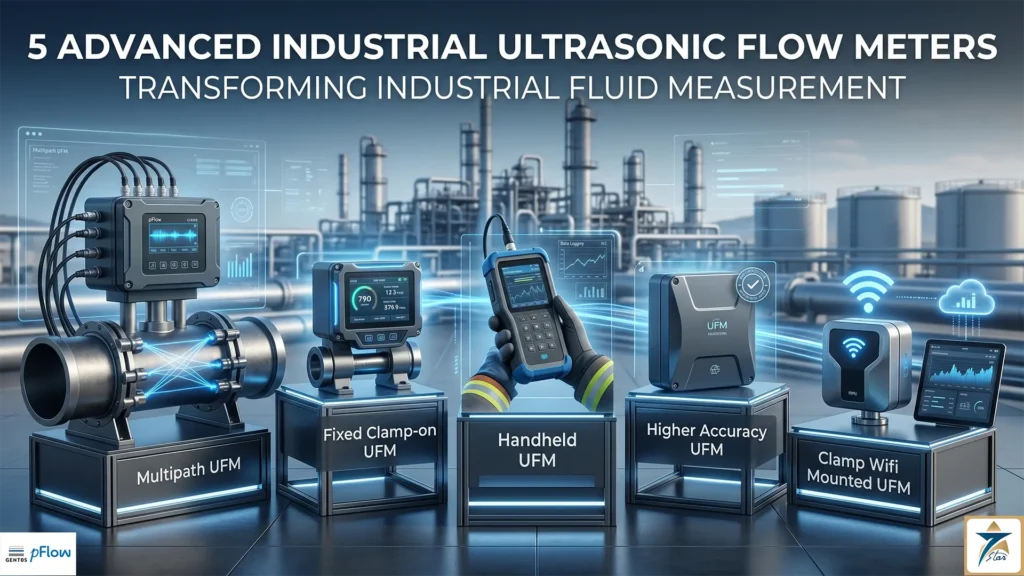
For permanent monitoring on larger pipes or where higher confidence is needed, multipath designs such as the pFlow D348D Plus multipath ultrasonic flowmeter average the velocity across several sound paths, reducing sensitivity to disturbed flow profiles. For general industrial water lines, a universal clamp-on meter such as the pFlow D118i offers flexibility across pipe sizes and materials.
Seven Star LLC supplies ultrasonic flowmeters and water monitoring instruments to industrial facilities, utilities and contractors across Oman. Share your pipe sizes, fluids and monitoring objectives, and our team will help you specify a solution.
Free, no-obligation quotation · takes about 1 minute
Other enquiries: [email protected] · WhatsApp
Visit the official pFlow website to explore comprehensive product information, detailed technical specifications, calibration guidelines, and official manufacturer resources for professional flow measurement applications.
Official authorization letter confirming Seven Star LLC as an approved partner of pFlow, covering sales and technical support activities in Oman.
Our technical team assists with product selection, specifications, applications, and quotations for pFlow instruments.