
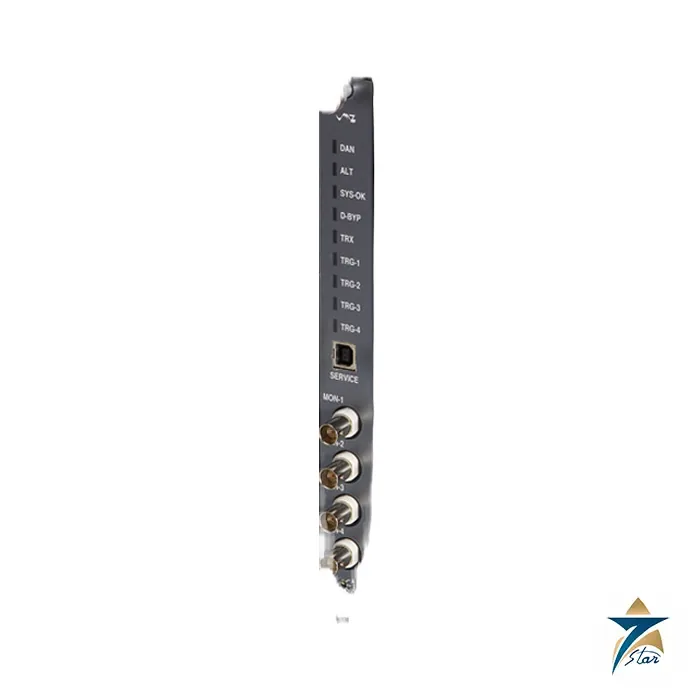
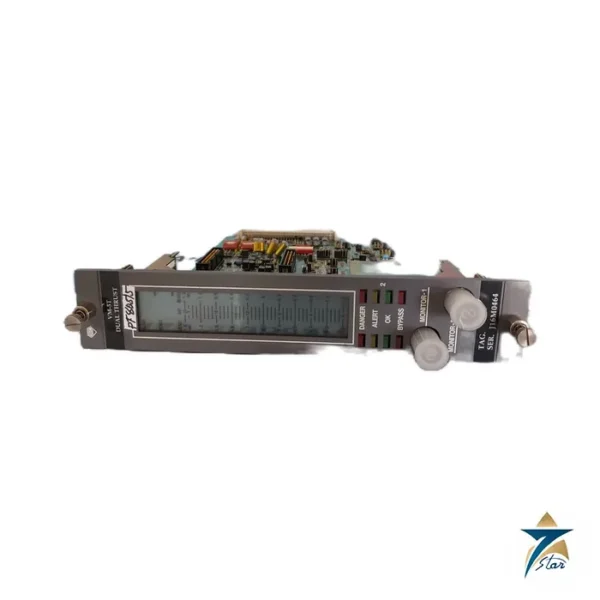
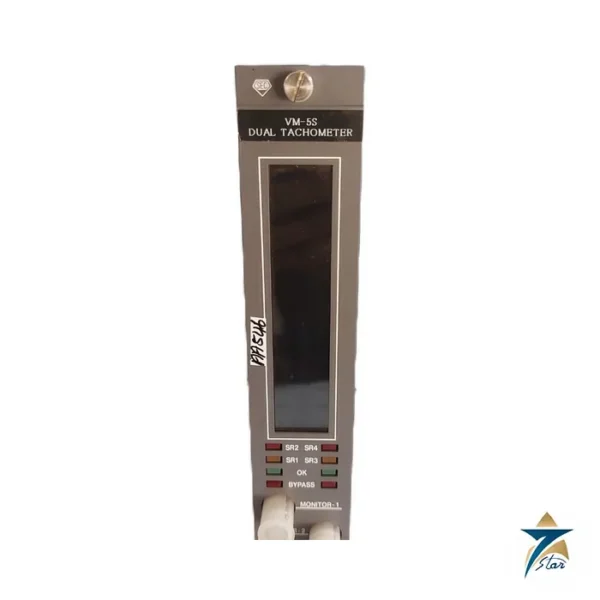
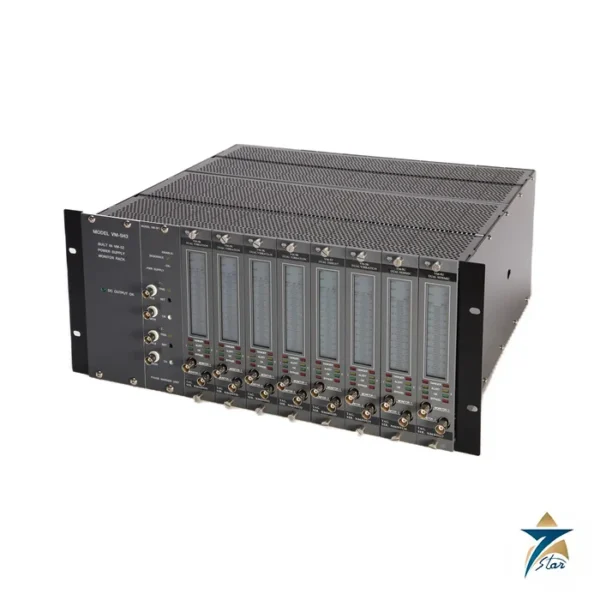
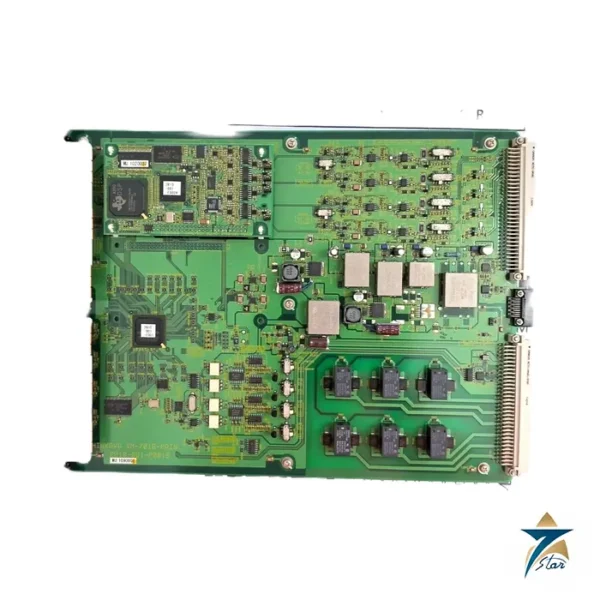
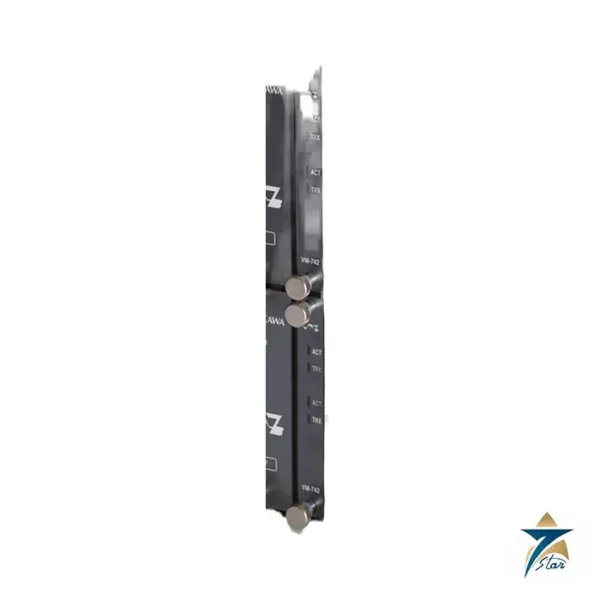
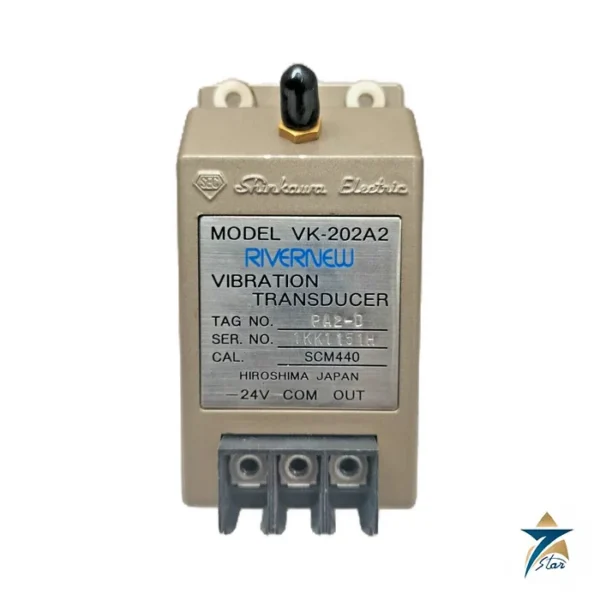
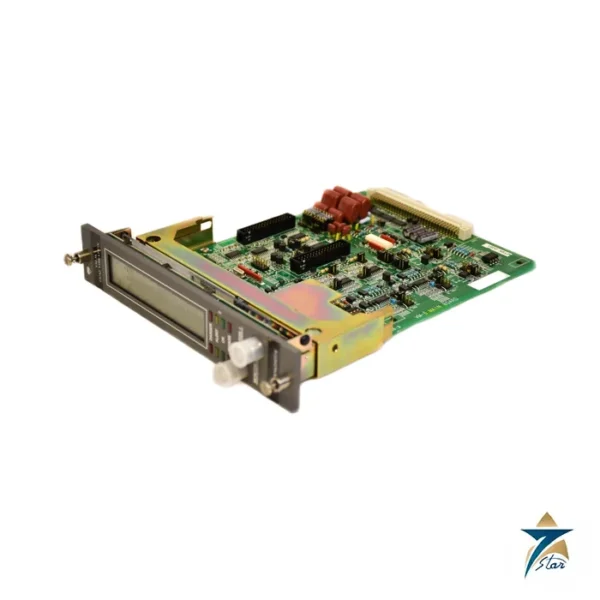
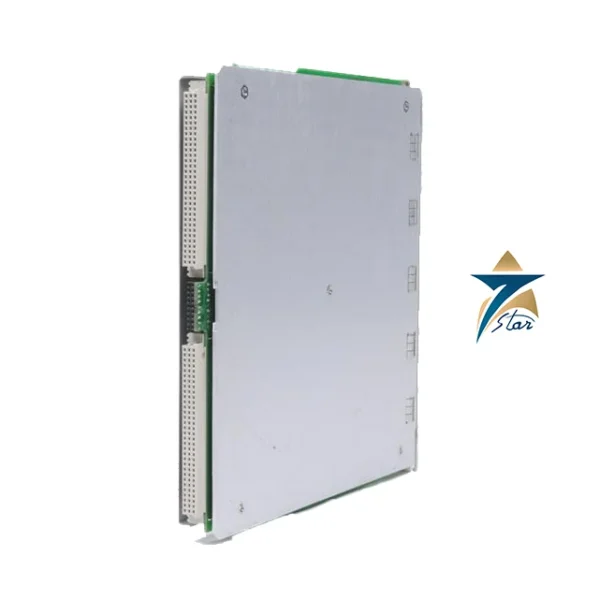
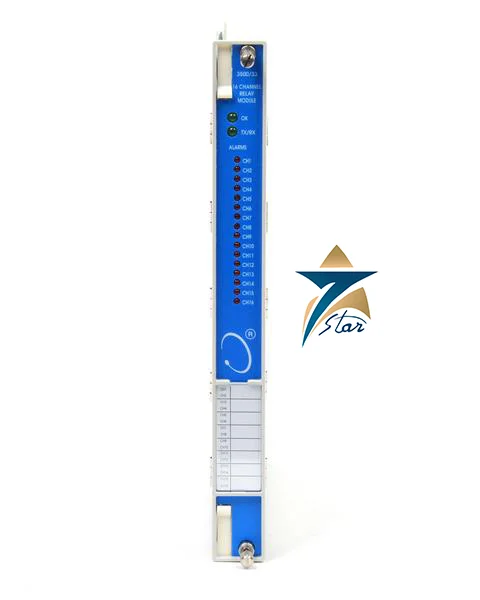
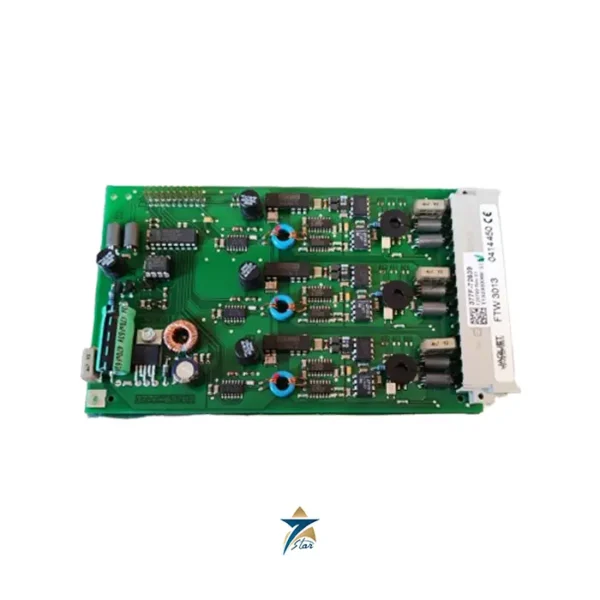
The Shinkawa VM-741B/CSU/TB1 vibration monitor belongs to the Shinkawa VM series and is configured for turbine monitoring applications. The monitor conditions the vibration sensor signal and provides the alarm and trip functions required for the protection of the turbine train, together with a DC output for recording and diagnostics. Shinkawa Electric supplies the VM series as complete monitoring channels with the matching sensors, and the legacy models remain available through the discontinued products channel with the outline drawings and wiring diagrams.
The VM-741B is applied to turbine trains where continuous bearing housing vibration monitoring is required for protection and diagnostics. The monitor is connected to the vibration and thrust position sensors of the train, and the relay outputs are wired into the turbine protection circuit. The channel is commissioned with the setpoints recommended by the turbine manufacturer, and the DC output provides the trend signal for the recorder and the DCS.
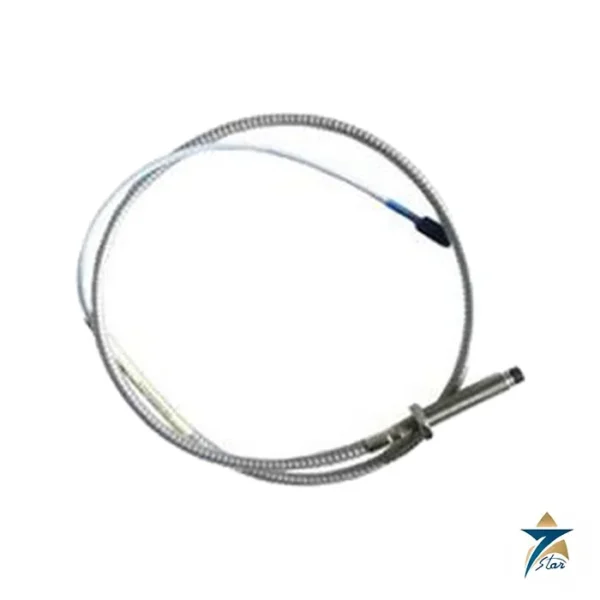
In turbine service, the monitor is connected to the bearing housing vibration sensor and the thrust position sensor of the monitored train. The conditioned signal is compared with the alarm and trip setpoints, and the relay outputs are wired into the turbine protection circuit. The DC output feeds the recorder or the DCS, giving the operator a continuous picture of the machine condition beyond the simple alarm function.
The CSU and TB1 suffixes define the channel configuration, including the sensor interface and the terminal block layout for the turbine installation. The monitor is verified against the original Shinkawa configuration before shipment, and the mounting follows the VM series rack or panel arrangement. For operators running legacy Shinkawa turbine monitoring systems, the VM-741B channel provides a reliable spare or extension path.
In turbine service the VM-741B monitor is connected to the vibration sensors on the bearing housings of the turbine train and to the thrust position sensor, and the relay outputs are wired into the turbine protection circuit. The alarm and trip setpoints are set during commissioning according to the turbine manufacturer recommendations and the plant protection philosophy. The DC output carries the live vibration value to the recorder and the DCS, where the trend is compared with the historical data of the machine. The monitor is tested with the simulated signal before the turbine is started, and the readings are verified against the portable analyzer during the initial run. The CSU and TB1 suffixes define the sensor interface and the terminal block layout of the channel, and the spare is verified against the installed configuration before shipment. Shinkawa publishes the outline drawings and the wiring diagrams for the VM series, and the legacy models are supported through the discontinued products channel. The VM-741B keeps the installed turbine monitoring system operational with a drop-in spare channel for the plant maintenance stock. The turbine protection channel is verified during the annual outage and the setpoint record is reviewed by the reliability engineer. The analog output scaling is checked against the sensor calibration during the same verification. The monitor is supplied in the panel format of the VM series for the control room installation. The spare channel is kept in stock for the critical turbine trains of the plant.
The VM-741B is used on steam turbines, gas turbines, turbocompressors and their driven equipment in power generation, oil and gas and industrial plants where turbine protection requires continuous vibration monitoring.
| Product line | Shinkawa VM seriesnType: vibration monitornModels: VM-741B with CSU/TB1 optionsnApplication: turbine monitoringnOutputs: alarm, trip, DC signalnMounting: rack or panelnManufacturer: Shinkawa Electric Co., Ltd. |
Seven Star LLC supplies Shinkawa VM series monitors for turbine monitoring applications across Oman and the GCC. Every part number is checked before your order is confirmed, and our team verifies the channel configuration against your turbine train.
Because the VM-741B channel handles both bearing vibration and thrust position inputs on a turbine train, we confirm which sensor interface your specific train uses before an order is placed, since the CSU configuration is built around a defined sensor set and substituting a mismatched interface can leave the thrust protection function incomplete even though the vibration channel itself appears to work correctly. Ahead of a planned turbine outage, we help reliability teams verify their existing setpoint records against the turbine manufacturer’s current recommendations, so any adjustment needed during the outage window is identified in advance rather than discovered during the time-pressured startup sequence.
Turbine trains are frequently the single most critical machine on a process unit, so an unplanned protection channel failure carries a disproportionate risk compared with an equivalent failure on auxiliary rotating equipment. We help operators of critical turbine trains keep a verified VM-741B spare on the shelf rather than sourcing one reactively after a failure, since the lead time on a correctly configured turbine monitoring channel can extend well beyond what an unplanned outage window allows for.
Submit a formal inquiry through our RFQ page with the VM-741B part number and your turbine configuration. We will confirm the matching channel and respond with a formal quotation. | Inquiry Form
Browse Shinkawa products by category: Vibration.
Choose the option that best fits your needs to get the fastest response from our team.
Automatically fill the RFQ form with this product's details for a faster process.
Manually enter multiple part numbers, specific brands, or custom requirements.








Reviews
There are no reviews yet.