Temperature Instrumentation

Temperature Instrumentation

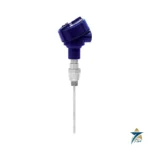
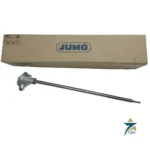
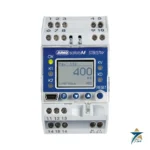
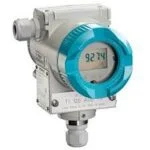
Temperature instrumentation in this category covers RTD probes and thermometer assemblies, head-mount, rail-mount and field-mount temperature transmitters, wireless units, safety temperature limiters and dry block calibrators. The products come from JUMO, WIKA, Rosemount, Endress+Hauser and ABB, with further items from other makers listed below. Seven Star LLC supplies these temperature sensors and transmitters from Muscat to process plants, utilities and building-services contractors in Oman and the GCC.
Read more about Temperature Instrumentation

Category guide

About Temperature Instrumentation

72 products 22 brands

Temperature instrumentation in this category covers RTD probes and thermometer assemblies, head-mount, rail-mount and field-mount temperature transmitters, wireless units, safety temperature limiters and dry block calibrators. The products come from JUMO, WIKA, Rosemount, Endress+Hauser and ABB, with further items from other makers listed below. Seven Star LLC supplies these temperature sensors and transmitters from Muscat to process plants, utilities and building-services contractors in Oman and the GCC.

Temperature sensors, transmitters and calibrators listed

  • RTD temperature probes: screw-in, mineral-insulated and thermowell-mounted assemblies from JUMO, WIKA, ABB and Rosemount.
  • Temperature transmitters with 4-20 mA, HART or wireless output from Rosemount, Siemens and Yokogawa.
  • Safety temperature limiters and monitors from JUMO.
  • Humidity and temperature sensors for ducts and rooms, with Siemens, Vaisala and Industrie Technik in the list.
  • Dry block calibrators from Isotech for checking sensors on site.
  • Further items from Moore Industries and Honeywell.

Choosing an RTD, a thermocouple and a temperature transmitter

RTDs are the usual choice for moderate temperatures where accuracy and stability count. Thermocouples cover higher temperatures and tolerate vibration better. For an RTD the wiring matters: three-wire and four-wire connections compensate for lead resistance, and four-wire gives the best result. The sensor normally sits in a thermowell so it can be changed with the process running. Thermowell length, shape and material follow the line size, velocity and fluid, and on fast-flowing lines a wake frequency calculation to ASME PTC 19.3 TW is commonly required. A transmitter in the connection head converts the sensor signal to 4-20 mA close to the source, which avoids long runs of sensor cable. Ex ia or Ex d versions are used in classified areas.

What to send for a quotation

For a sensor, send type and class, number of elements, insertion length and diameter, process connection, thermowell material and dimensions, head type and temperature range. For a transmitter, send input type, range, output, mounting style and approvals. A full model code is the best reference. We check it against the manufacturer documentation and propose the manufacturer’s successor for obsolete models.

What to include in your inquiry

These details let us quote the right item the first time.

  • Sensor type (RTD, thermocouple) or transmitter model
  • Temperature range
  • Insertion length, diameter and thermowell
  • Process connection
  • Output signal (4-20 mA, HART, fieldbus)
  • Hazardous-area approval, if required

Missing some of them? Send what you have. A nameplate photo or an old part number is enough to start.


Request a Quote for Temperature Instrumentation

Looking for a specific model, part number or brand in Temperature Instrumentation? Send us your requirements and quantities. Seven Star LLC sources genuine industrial equipment for customers across Oman and the GCC and replies with a formal quotation.

Free, no-obligation quotation · takes about 1 minute

Other enquiries: [email protected] · WhatsApp

Frequently Asked Questions

RTD or thermocouple: which should I specify?
Specify an RTD, usually Pt100, when accuracy and long-term stability matter and the temperature is within the range platinum resistance sensors cover. Specify a thermocouple for high temperatures such as furnaces, flue gas and reactors, for very fast response with small junctions, or where strong vibration would damage a resistance element. The thermocouple type is chosen by temperature range and atmosphere.
What is the difference between 2-wire, 3-wire and 4-wire RTD connections?
In a 2-wire connection the lead resistance adds directly to the measured value. A 3-wire connection lets the transmitter subtract the lead resistance, assuming the leads are equal, and is the common industrial choice. A 4-wire connection removes the lead influence completely and is used where the best accuracy is wanted. The transmitter input must be configured for the wiring used.
When is a thermowell wake frequency calculation required?
Flow past a thermowell sheds vortices that can make it vibrate. If the shedding frequency comes close to the natural frequency of the well, fatigue failure is possible. A calculation to ASME PTC 19.3 TW checks this using the well dimensions and the process velocity, density and temperature. Project specifications normally ask for it on gas, steam and high-velocity liquid lines.
Can I replace only the sensor insert and keep the thermowell?
Yes, that is the normal maintenance practice. The replacement insert must match the bore diameter and depth of the existing thermowell so the tip touches the bottom, usually with a spring-loaded mounting. Give us the insert length and diameter, the sensor type and wiring, and the connection head or extension details, or simply the model code of the existing assembly.
What information do you need to quote a temperature sensor or transmitter?
Sensor type, tolerance class and wiring, single or duplex element, temperature range, insertion length, sheath diameter and material, process connection, thermowell details, connection head and cable entry. For the transmitter: input, calibrated range, output and protocol, mounting style, display and area classification. State if the manufacturer's calibration certificate or a wake frequency calculation is required.