














In the high-stakes industrial environment of Oman and the wider GCC region, operational excellence is measured by a single metric: Operating Expenditure (OPEX). For facilities ranging from massive desalination plants to complex petrochemical refineries, the pressure to optimize costs while maintaining precision has never been higher.
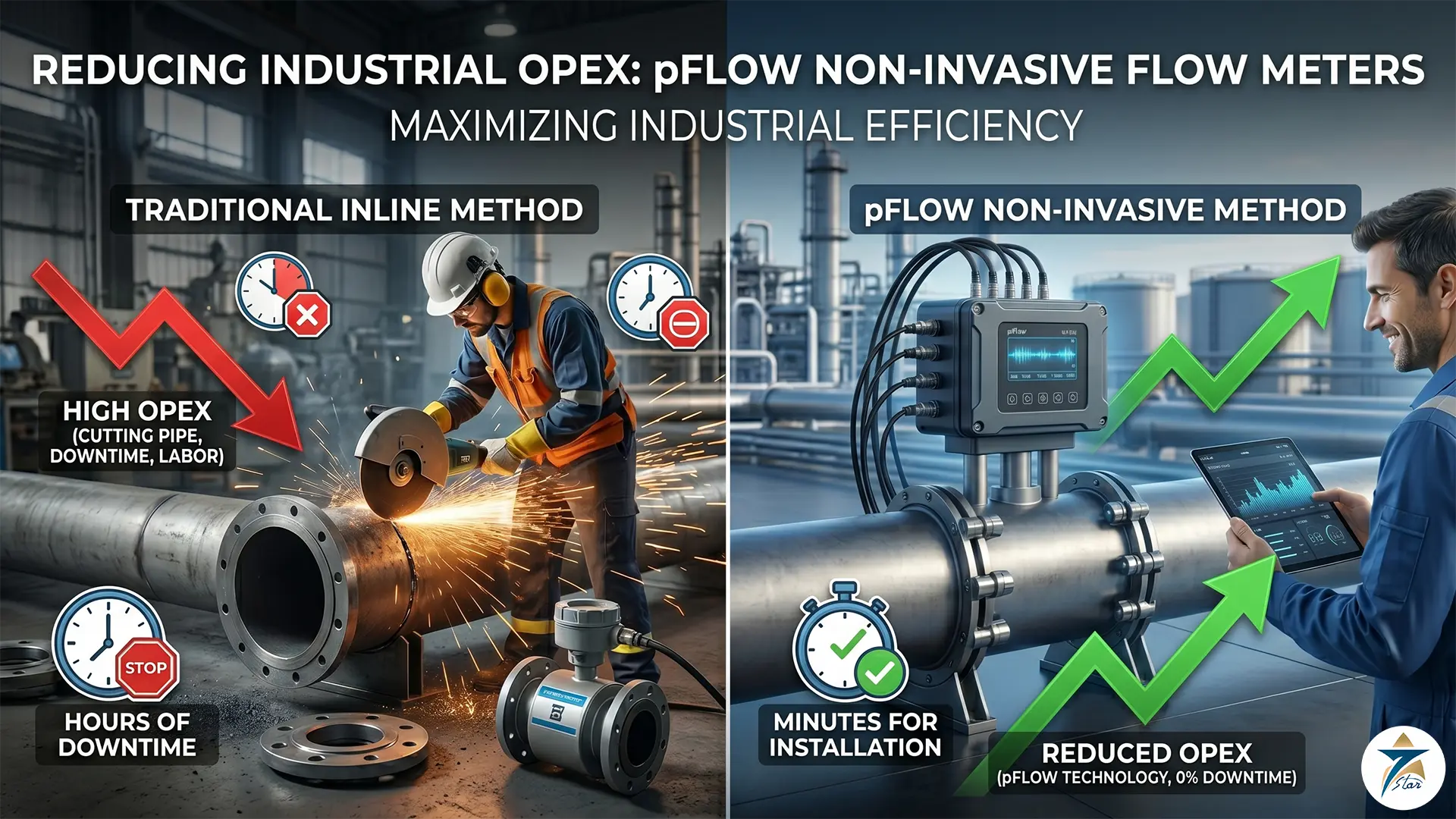
One of the most effective, yet often overlooked, strategies for reducing industrial OPEX is the transition to non-invasive flow measurement. By utilizing advanced transit-time ultrasonic technology, industries can eliminate the heavy costs associated with traditional inline metering.
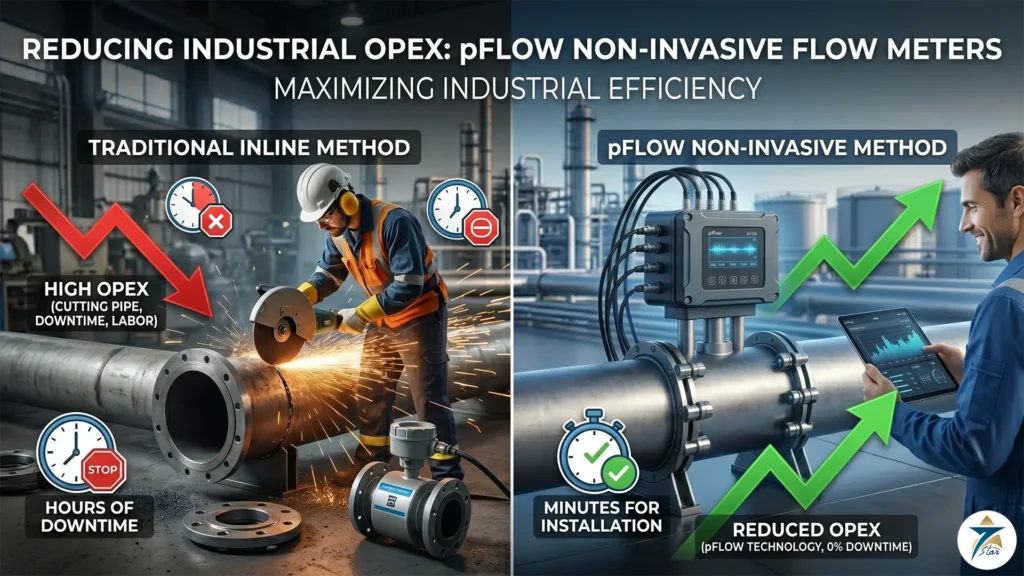
Traditional flow meters (such as Magnetic or Turbine meters) require a physical breach of the pipeline. This introduces a cascade of expenses that many facility managers accept as a “necessary evil”:
The primary driver for reducing industrial OPEX through pFlow technology is the elimination of downtime. Because clamp-on sensors are installed on the exterior of the pipe, the process remains 100% operational.
Inline meters act as physical obstructions, creating a permanent pressure drop within the system. This forces pumps to work harder and consume more electricity.
Corrosive, abrasive, or high-temperature fluids quickly degrade internal sensors, leading to measurement drift and the need for frequent recalibration.
By using pFlow’s Picofly™ algorithm, facilities gain:
Breaching a pipe always introduces the risk of leaks and environmental hazards. Maintaining pipeline integrity is not just a safety requirement—it is a financial one. Non-invasive measurement avoids the risk of sealing failures and leaks, ensuring your facility remains compliant with international safety standards without the administrative burden of invasive maintenance.
| Cost Driver | Inline Metering | pFlow Non-Invasive | OPEX Impact |
| Installation | 8+ Hours (Pipe Cutting) | < 1 Hour (Clamp-on) | Massive Savings |
| System Shutdown | Mandatory | None | Revenue Protection |
| Pressure Drop | High (Energy Loss) | None | Lower Electricity |
| Maintenance | High (Corrosion Risk) | Near-Zero | Reduced Budget |
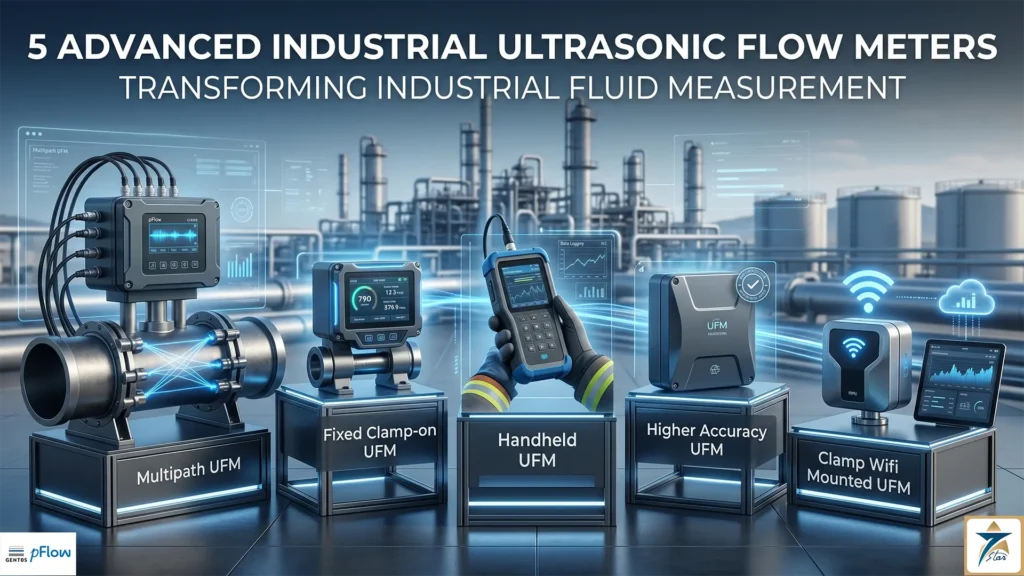
A clamp-on transit-time flowmeter uses a pair of transducers mounted on the outside of the pipe. Each transducer alternately sends and receives an ultrasonic pulse that travels through the pipe wall, across the liquid and back out through the opposite wall (or, in a reflect/V-mount arrangement, bounces off the far wall back to the same side).
When the liquid is moving, the pulse travelling with the flow arrives slightly sooner than the pulse travelling against it. The difference between the upstream and downstream transit times is proportional to the average flow velocity along the sound path. The meter’s electronics combine this velocity with the pipe’s internal diameter, a flow-profile correction and the programmed pipe and liquid data to calculate volumetric flow.
Because the calculation depends on the pipe geometry, the accuracy of the entered data matters. Pipe outer diameter, wall thickness, pipe material, lining and fluid type must be set correctly, and an ultrasonic thickness gauge is often used to confirm wall thickness on older pipes.
Non-invasive meters are not a universal replacement for every inline meter, but they are particularly cost-effective in the following situations:
Being clear about the limitations helps avoid disappointing results:
A structured approach helps turn the technology’s advantages into measurable savings:
Good installation is the biggest factor in clamp-on meter performance. Mount transducers on the side of horizontal pipes (roughly the 3 or 9 o’clock position) to avoid air at the top and sediment at the bottom. Prepare the pipe surface by removing paint, rust and scale, use the recommended acoustic couplant, and set the transducer spacing exactly as calculated by the transmitter. Once installed, check the signal strength and signal quality indicators before commissioning. In Oman’s high ambient temperatures, confirm that the transducer and couplant ratings suit the pipe surface temperature, and protect transmitters from direct sunlight.
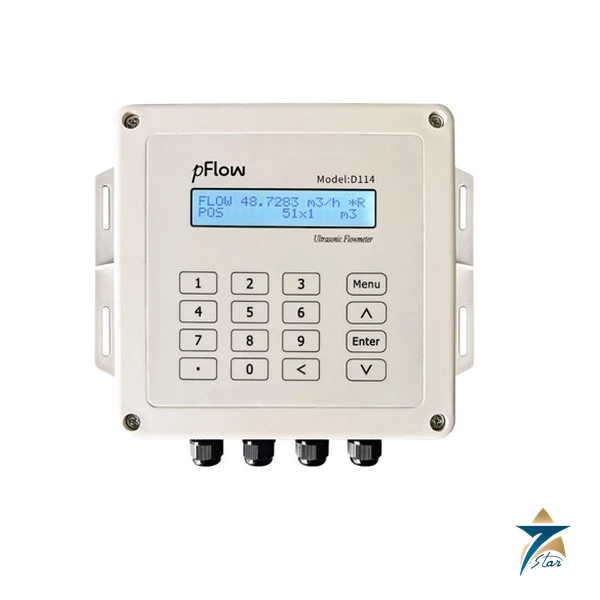
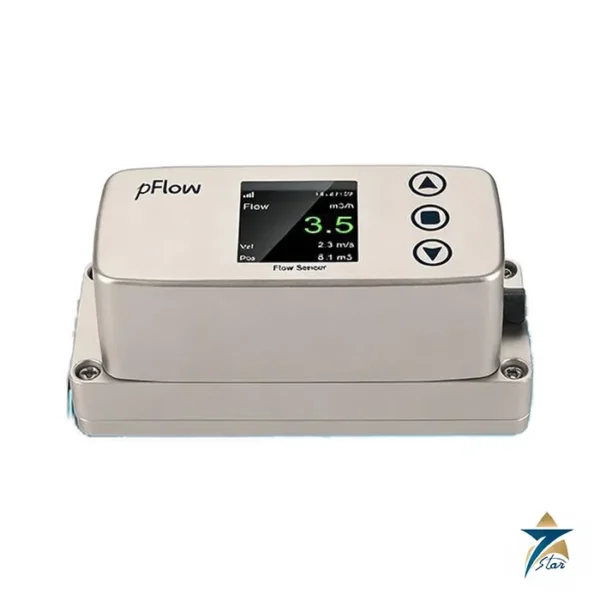
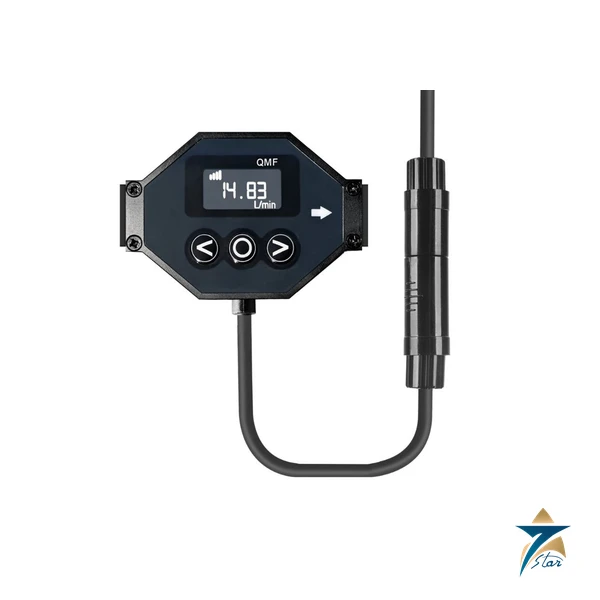
Seven Star LLC supplies clamp-on, portable and multipath ultrasonic flowmeters, along with other flow technologies in our flowmeters category. Share your pipe details and process conditions and our team will help you select a suitable meter for your application.
Free, no-obligation quotation · takes about 1 minute
Other enquiries: [email protected] · WhatsApp
Visit the official pFlow website to explore comprehensive product information, detailed technical specifications, calibration guidelines, and official manufacturer resources for professional flow measurement applications.
Official authorization letter confirming Seven Star LLC as an approved partner of pFlow, covering sales and technical support activities in Oman.
Our technical team assists with product selection, specifications, applications, and quotations for pFlow instruments.