Regulators

Regulators

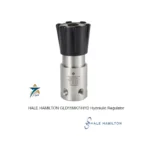
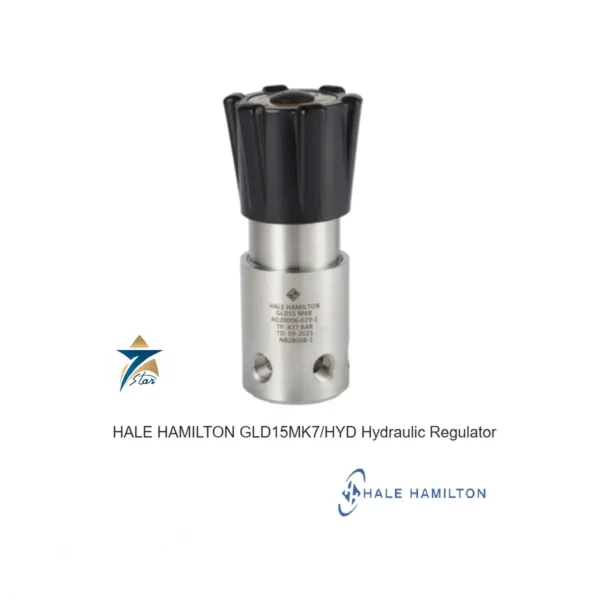
Pressure regulators hold a pressure constant without any external power or control signal: the process fluid itself, acting on a diaphragm against a spring, positions the valve. Seven Star LLC supplies pressure reducing regulators, back pressure regulators, filter regulators and volume boosters in Oman from Masoneilan, Fisher, SMC and Swagelok. Most of the 31 listed items are Masoneilan regulators and pneumatic relays. A Hale Hamilton hydraulic regulator is also included.
Read more about Regulators

Category guide

About Regulators

31 products 8 brands

Pressure regulators hold a pressure constant without any external power or control signal: the process fluid itself, acting on a diaphragm against a spring, positions the valve. Seven Star LLC supplies pressure reducing regulators, back pressure regulators, filter regulators and volume boosters in Oman from Masoneilan, Fisher, SMC and Swagelok.

Most of the 31 listed items are Masoneilan regulators and pneumatic relays. A Hale Hamilton hydraulic regulator is also included.

Pressure reducing, back pressure and instrument air regulators

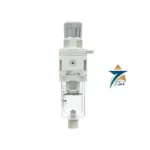
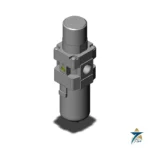
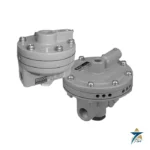
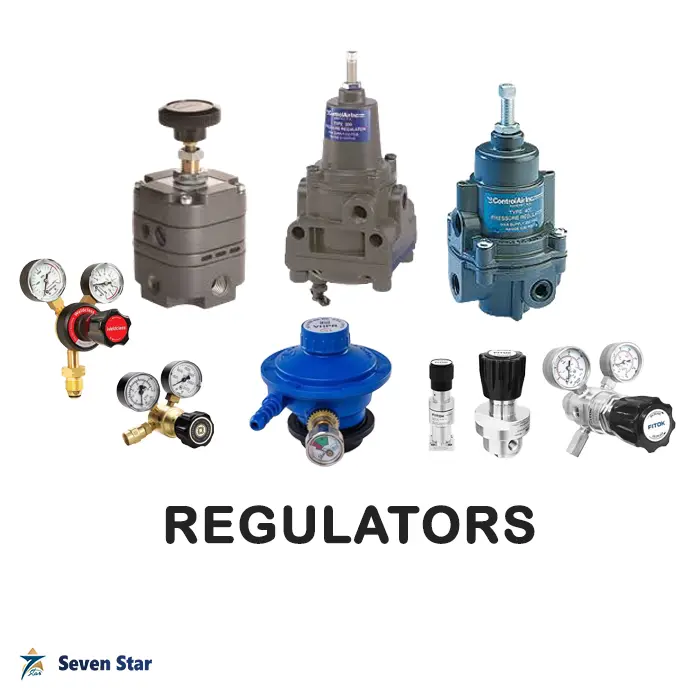
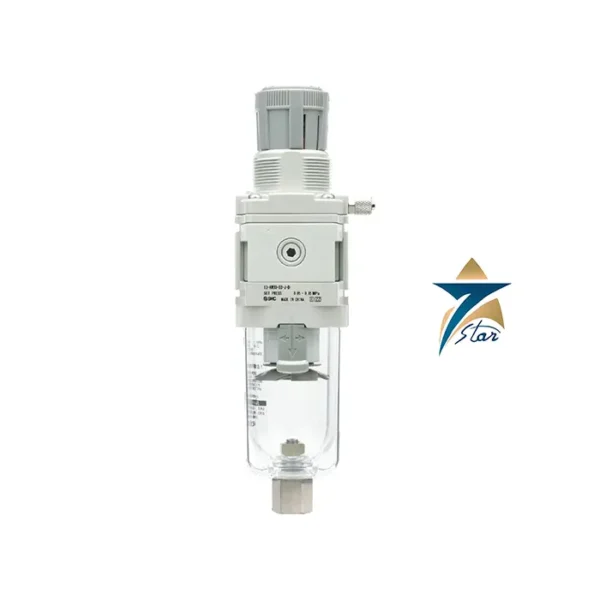
A pressure reducing regulator senses downstream pressure and closes as it rises. Listed examples are the Masoneilan 171 and 174 Series direct-operated regulators, the 525 double-seated and 535H single-seat regulators, the Fisher 627 and the Swagelok KPR Series. A back pressure regulator, such as the Masoneilan 536H or the 536V for very small flows, senses upstream pressure and opens as it rises, so it holds pressure on a vessel, a pump recirculation line or a sample system. Filter regulators such as the SMC AW40 clean and reduce compressed air for pneumatic equipment. Volume boosters, here the Masoneilan BR200 and BR400, are relays that repeat a pneumatic signal at a much higher air flow to stroke large actuators more quickly.

How to select a pressure regulator

Define the inlet pressure range, the outlet set pressure and the flow range, then check the fluid and temperature against body, trim and diaphragm materials. Direct-operated regulators are simple and respond quickly, but outlet pressure falls somewhat as flow increases, an effect called droop. Pilot-operated regulators hold pressure more closely over a broad span of flow and suit larger capacities. Choose the spring range so the set point sits near its middle. Remember that a regulator is a control device and does not replace a safety relief valve downstream. For sour gas, wetted materials must comply with NACE MR0175 / ISO 15156.

Data for a gas, air or liquid regulator quotation

Send the fluid, minimum and maximum inlet pressure, required outlet or back pressure, minimum and maximum flow, temperature, line size and end connections, and the body material. For a replacement, the model number and spring range from the nameplate are usually sufficient. We check the configuration against the manufacturer documentation for buyers across the GCC.

What to include in your inquiry

These details let us quote the right item the first time.

  • Fluid
  • Inlet pressure range
  • Outlet set pressure
  • Flow rate
  • Size and end connection
  • Body and seat material

Missing some of them? Send what you have. A nameplate photo or an old part number is enough to start.


Request a Quote for Regulators

Looking for a specific model, part number or brand in Regulators? Send us your requirements and quantities. Seven Star LLC sources genuine industrial equipment for customers across Oman and the GCC and replies with a formal quotation.

Free, no-obligation quotation · takes about 1 minute

Other enquiries: [email protected] · WhatsApp

Frequently Asked Questions

What is the difference between a pressure reducing regulator and a back pressure regulator?
The difference is which side is sensed. A pressure reducing regulator controls the pressure at its outlet and is normally open, closing as outlet pressure rises. A back pressure regulator controls the pressure at its inlet and is normally closed, opening as inlet pressure rises. Reducing regulators feed consumers at a lower pressure; back pressure regulators keep pressure on an upstream system.
What is droop in a pressure regulator?
Droop is the fall in outlet pressure as flow through a direct-operated regulator increases. More flow needs more valve opening, which means the spring extends and exerts less force, so the balance point shifts lower. It is normal behavior, shown on the manufacturer's capacity curves. If the application cannot accept it, select a larger regulator, a different spring range or a pilot-operated type.
When is a self-operated regulator enough, and when do I need a control valve?
A self-operated regulator needs no air supply, wiring or controller and reacts quickly, which makes it attractive for utilities, fuel gas, blanketing and remote sites. A control valve with a transmitter and controller gives closer control, remote set point adjustment and monitoring, at higher cost and complexity. Where a pressure only needs to be held near a fixed value, a regulator is usually sufficient.
What does a volume booster do on a control valve?
A volume booster sits between the positioner and a large actuator. It reproduces the positioner's output pressure one to one but supplies or exhausts air through much larger ports, so the actuator fills and vents faster and stroking time drops. Boosters are common on large diaphragm and piston actuators and on valves with short closing time requirements. An adjustable bypass keeps the loop stable on small signal changes.
Can the same regulator be used for gas, air, steam and water?
Not automatically. Regulator bodies may look alike, but the diaphragm and seat materials, the spring range and the internal sensing arrangement are chosen for the fluid and temperature. Steam needs metal or high-temperature parts, fuel gas often needs specific approvals, and water duty needs attention to noise and cavitation. Always state the fluid so the correct version is selected from the manufacturer documentation.