

Related products
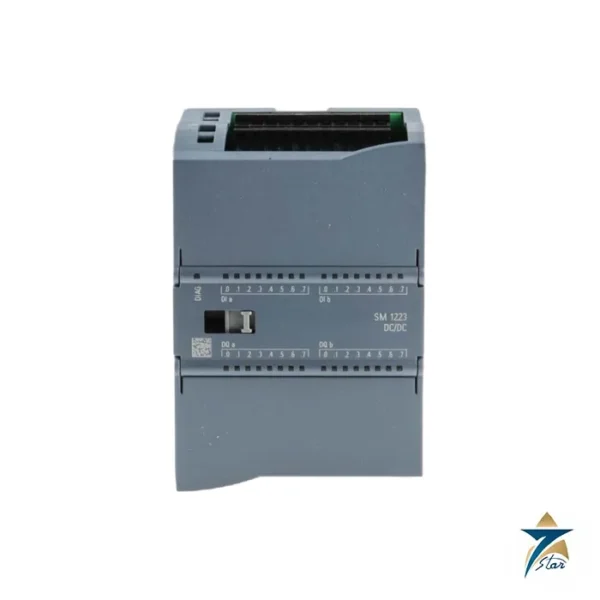
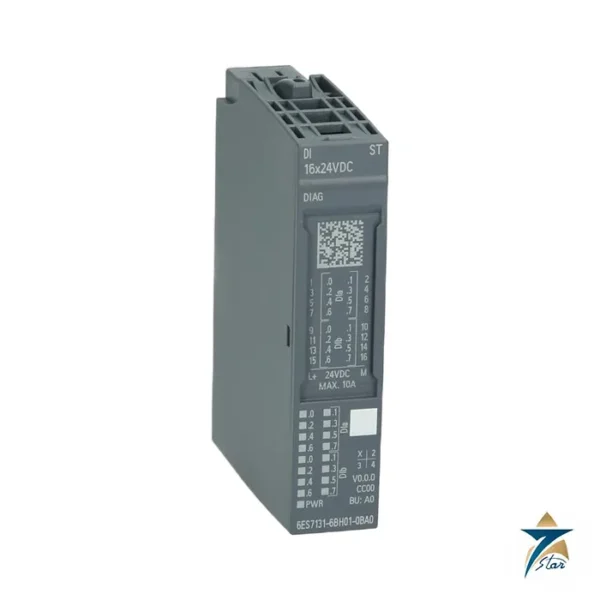
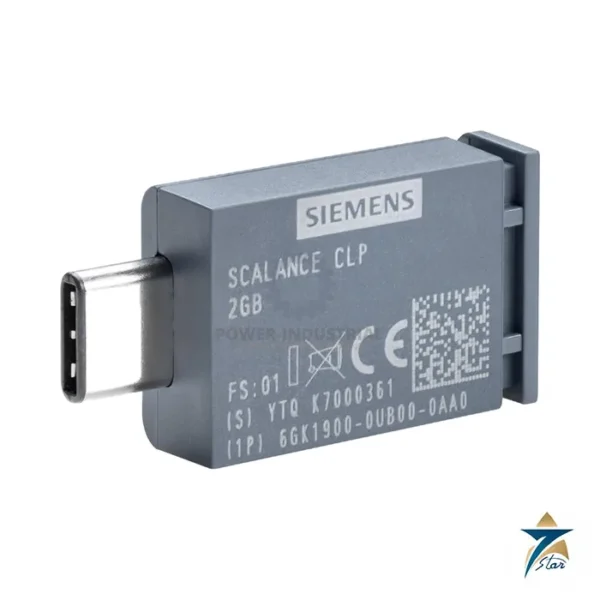

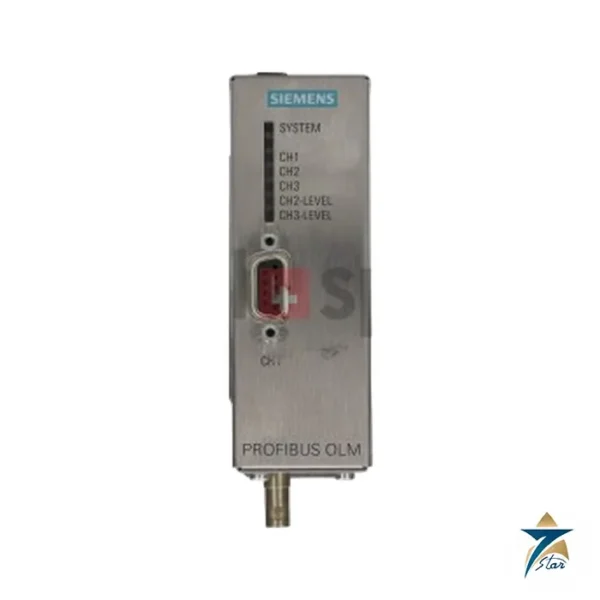


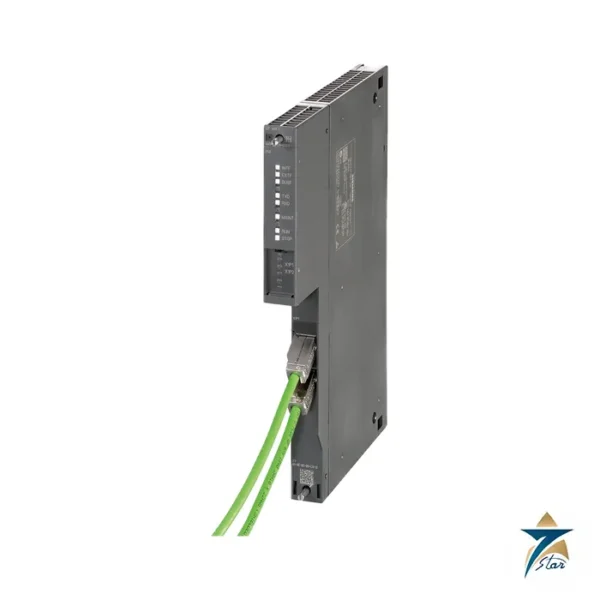
The Siemens SIMATIC S7-400 is a high-end modular PLC platform built for large-scale, demanding automation tasks where a smaller controller’s I/O count or processing headroom runs out. Its rack-based architecture supports multiple CPUs operating together in multicomputing mode, letting a single automation system handle distributed I/O, high-speed control loops, and fieldbus integration simultaneously.
As Siemens’ flagship advanced controller family, the S7-400 series is engineered for process plants, power stations, and large manufacturing lines that need scalability and long-term platform stability. Seven Star LLC supplies Siemens SIMATIC S7-400 controllers and spares as an authorized partner to industrial facilities across Oman and the GCC.
The S7-400 executes user programs from a rack-mounted CPU module, communicating with distributed I/O and other automation devices over PROFIBUS DP, PROFINET Industrial Ethernet, or the Multipoint Interface (MPI). In multicomputing mode, up to four CPUs can share a single rack, each handling a defined portion of the process, with the system’s total I/O capacity matching that of the highest-resource CPU installed. The platform supports cold, warm, and hot restart modes, along with configuration-in-run (CiR) changes that let engineers modify parts of the configuration without stopping the whole system.
The S7-400’s modular rack design accepts a range of CPU models with different performance levels, letting engineers assign faster CPU variants to time-critical process sections and standard CPUs elsewhere in the same architecture. Memory capacity scales with the memory card installed, sized to match the user program and system data requirements of each application. Communication options span MPI for programming and HMI connections, PROFIBUS DP for distributed I/O and drives, and PROFINET for Industrial Ethernet integration with plant-wide networks and SCADA systems.
The S7-400 is specified for large process plants, power generation facilities, and complex manufacturing lines across Muscat, Sohar, and Salalah, where a single automation system must coordinate hundreds or thousands of I/O points alongside high-speed control loops. Its multicomputing capability suits applications that benefit from dividing control tasks across multiple CPUs within one rack rather than deploying several separate controllers.
Across the GCC’s oil, gas, and heavy industrial sectors, the S7-400 remains widely deployed in legacy and ongoing installations where PROFIBUS DP and MPI networks are already established, and where the platform’s proven reliability and Siemens support ecosystem outweigh the appeal of migrating to a newer controller family.
| Parameter | Specification |
|---|---|
| Architecture | Modular rack-based PLC |
| Multicomputing | Up to 4 CPUs per rack |
| Communication | MPI, PROFIBUS DP, PROFINET Industrial Ethernet |
| Memory | Scalable via removable memory card |
| Restart Modes | Cold, warm, hot restart |
| Live Reconfiguration | Configuration-in-run (CiR) |
| I/O Capacity | Matches highest-resource CPU in multicomputing mode |
Contact Seven Star LLC for pricing, availability, and technical support on Siemens SIMATIC S7-400 CPUs, racks, and I/O modules across Oman and the GCC. Our team can help identify the correct CPU tier and communication configuration for your process scale.
Click to view complete Siemens information.
Choose the option that best fits your needs to get the fastest response from our team.
Automatically fill the RFQ form with this product's details for a faster process.
Manually enter multiple part numbers, specific brands, or custom requirements.
Reviews
There are no reviews yet.