Fluid measurement is the heartbeat of any major industrial operation. From water treatment facilities to massive petrochemical plants, knowing exactly how much liquid is moving through your pipelines is critical for efficiency, billing, and safety.
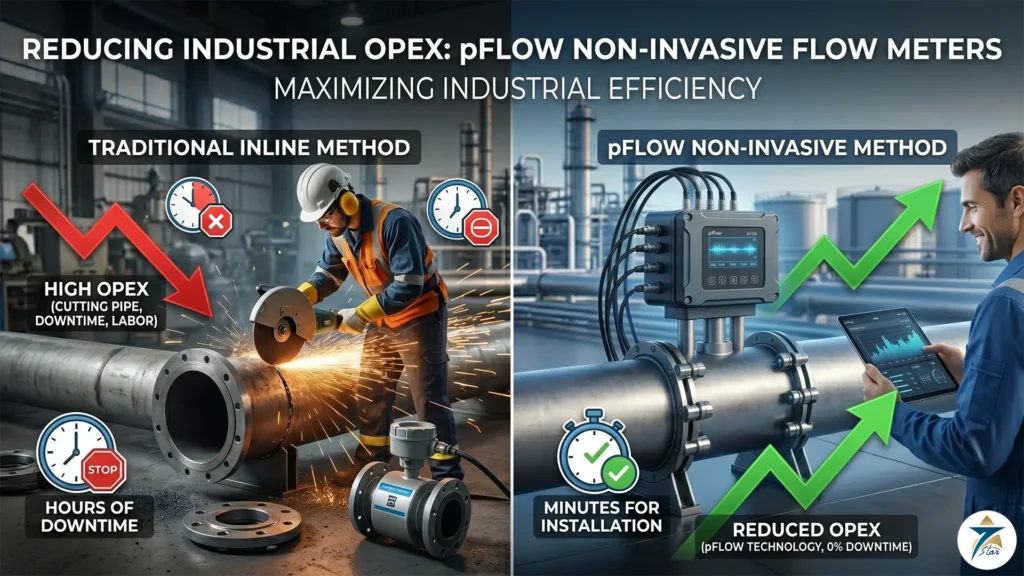
Historically, measuring flow meant shutting down the system, cutting the pipe, and installing a mechanical or electromagnetic meter. Today, ultrasonic flow measurement technology has eliminated that costly downtime. By using high-frequency sound waves to measure fluid velocity from the outside of the pipe (clamp-on technology), industries can now achieve zero-downtime installations.
However, not all ultrasonic flow meters are created equal. Depending on your specific application—whether you need extreme precision, portability, or smart connectivity—the technology varies significantly.
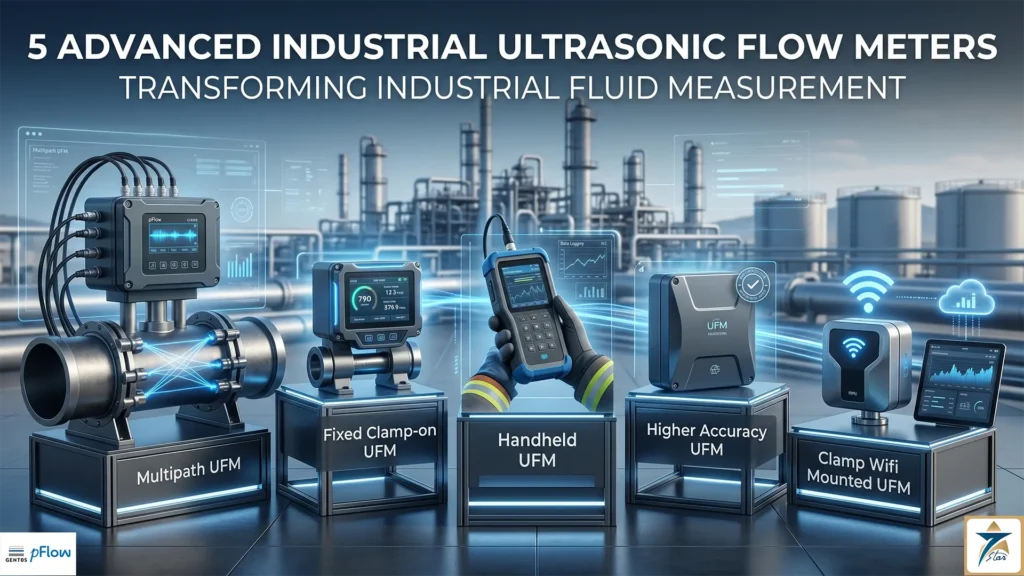
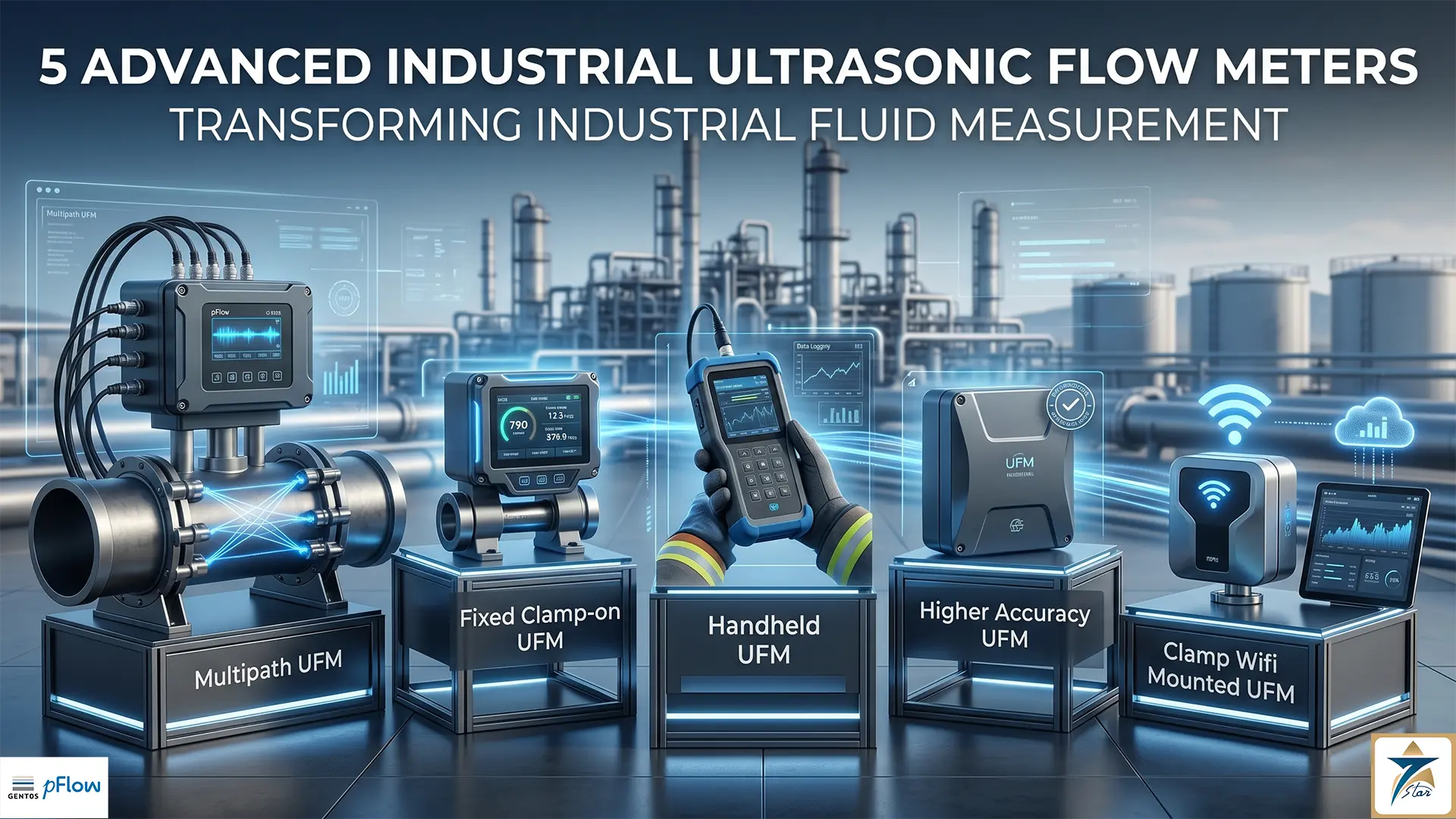
In this guide, we break down the 5 most important types of Industrial ultrasonic flow meters available today, helping you choose the right tool for your facility.
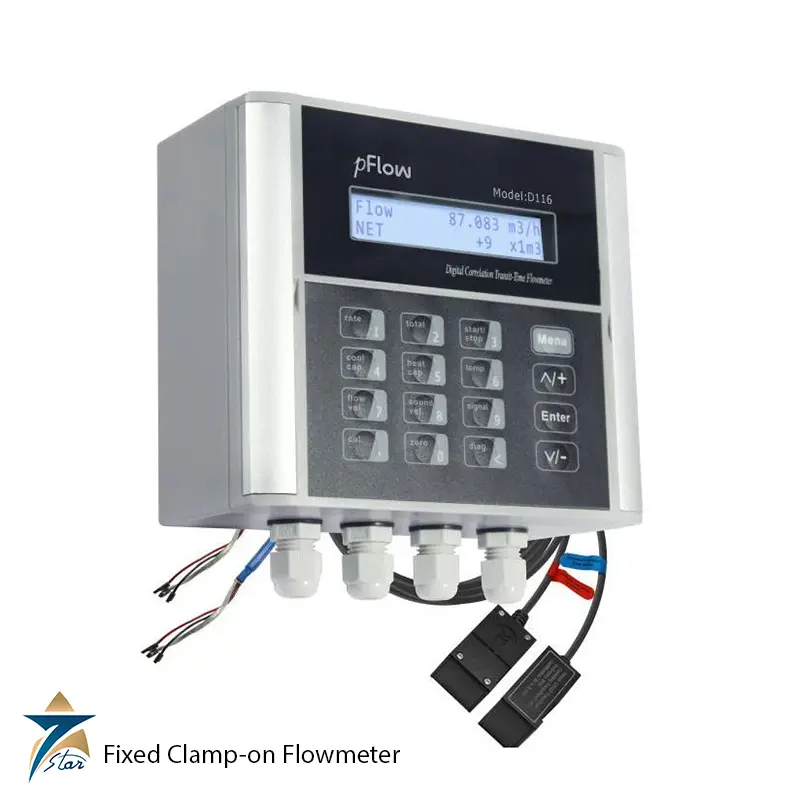
1. The Fixed Clamp-On Flowmeter
Best for: 24/7 Continuous Process Monitoring
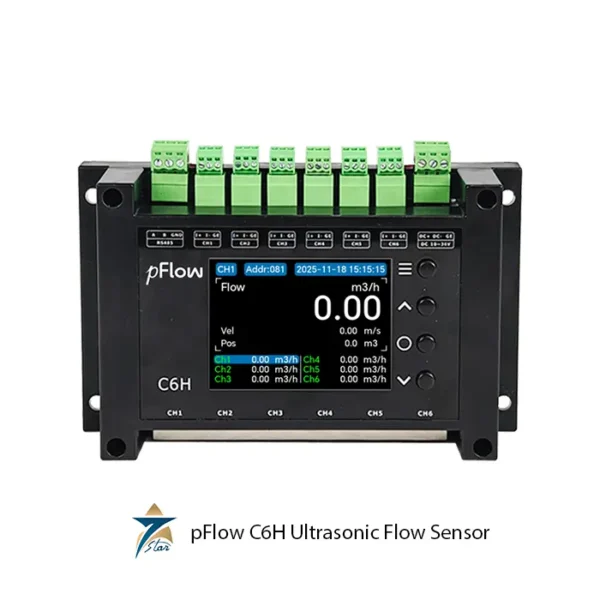
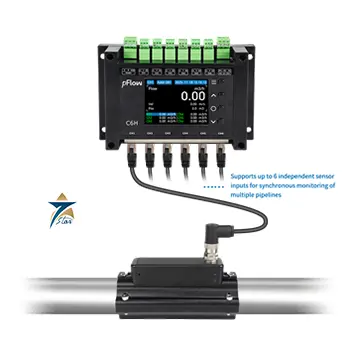
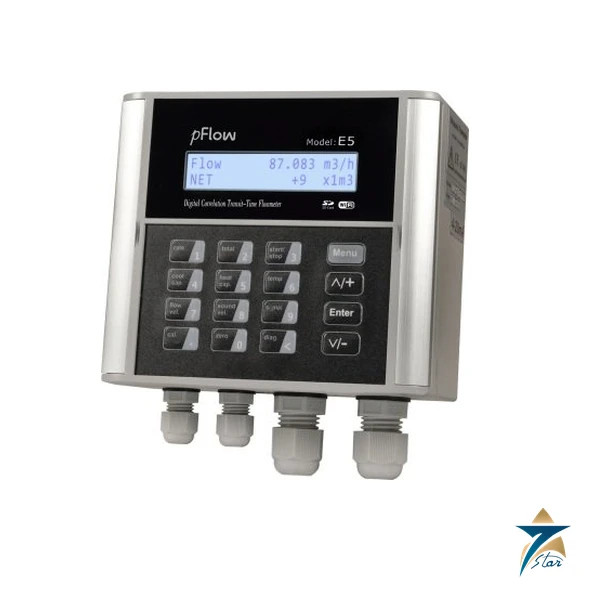
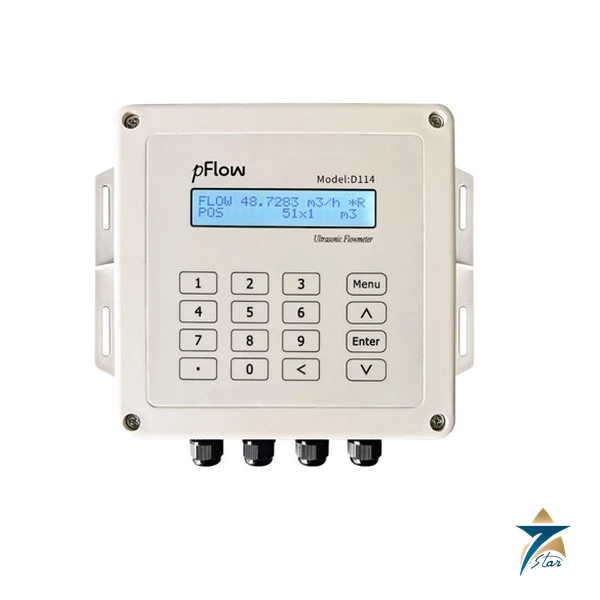
When industrial facilities require a permanent, reliable, and uninterrupted flow of data, the fixed clamp-on flowmeter is the industry standard. These units consist of a wall-mounted transmitter (often enclosed in a rugged, weather-resistant IP65/IP68 casing) and transducers permanently clamped to the outside of the pipeline.
Why it matters: Fixed meters are designed to integrate seamlessly into a plant’s central nervous system. They come equipped with standard industrial communication protocols like 4-20mA, pulse outputs, and RS485 Modbus. This allows the flow data to be fed directly into SCADA or DCS systems, making them ideal for municipal water distribution networks, cooling water loops in refineries, and continuous wastewater monitoring.
2. The Handheld Ultrasonic Flow Meter
Best for: Site Audits, Troubleshooting, and Maintenance Teams
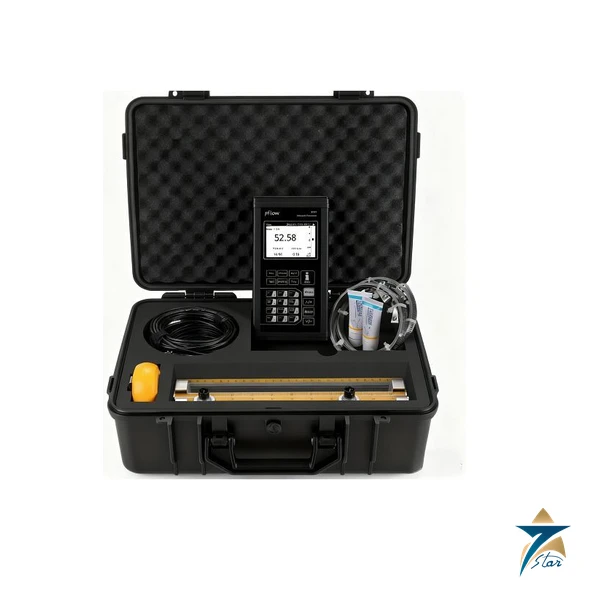
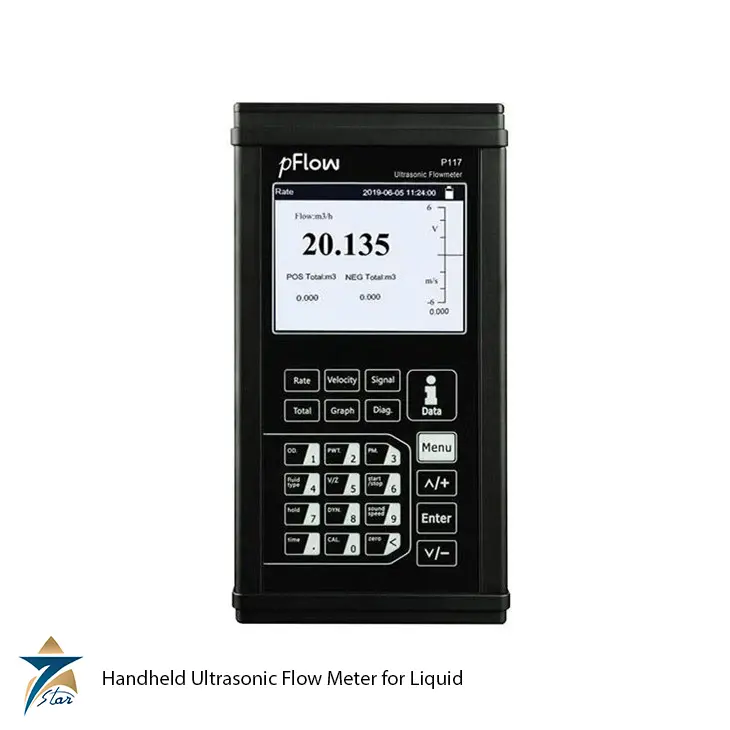
Not every pipeline requires a dedicated, permanent meter. Facility engineers and maintenance crews often need to check flow rates across dozens of different pipes in a single day. This is where the handheld ultrasonic flow meter shines.
Why it matters: These devices are engineered for total mobility. They are lightweight, battery-powered (often lasting up to 10-12 hours on a single charge), and come in a protective carrying case. A technician can walk up to a pipe, clamp on the sensors, and get a highly accurate reading within minutes. With built-in data loggers, engineers can record flow trends and download the data later for analysis. They are the ultimate diagnostic tool for HVAC balancing, pump testing, and energy audits.
3. The Multipath Ultrasonic Flow Meter
Best for: Large Pipelines and Complex Flow Profiles
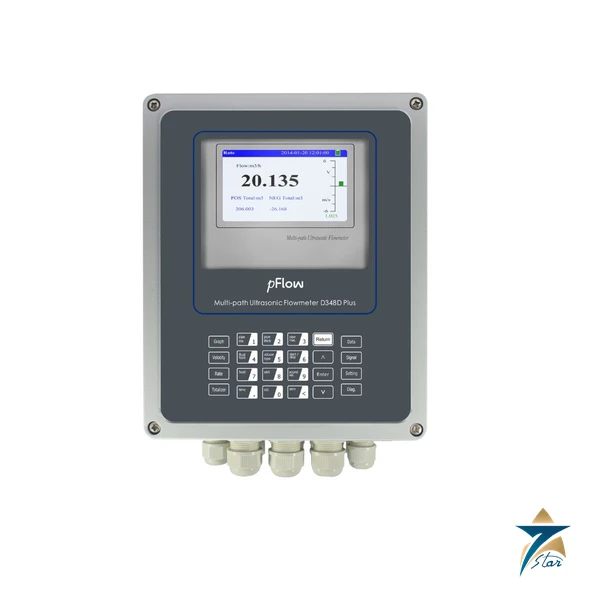
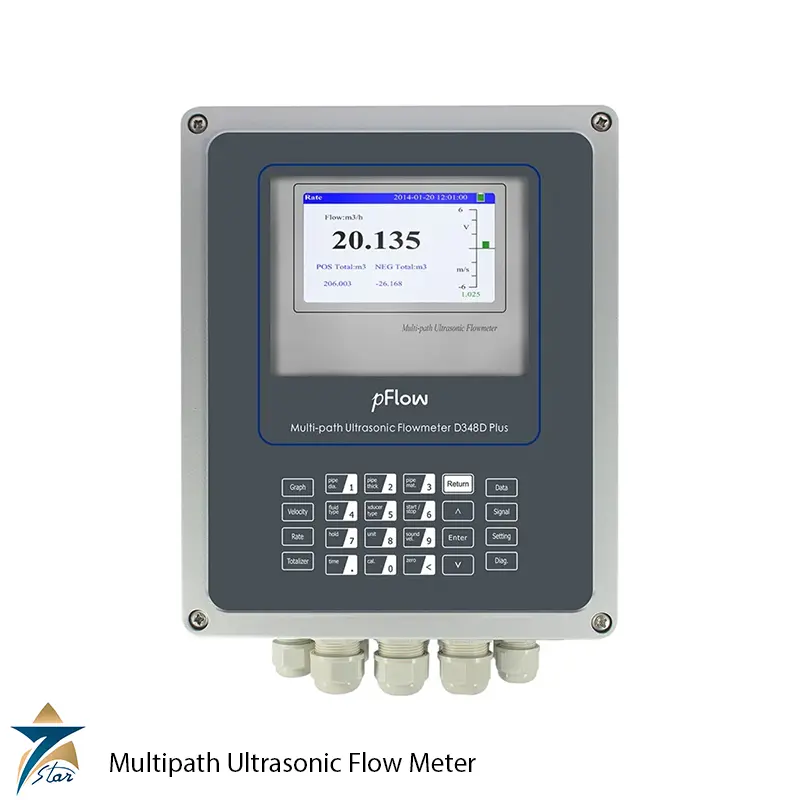
Standard ultrasonic meters use a single “path” of sound waves to measure the fluid. While this works perfectly for stable, straight pipes, it can struggle in massive pipelines or in areas where the fluid dynamics are turbulent (such as right after a pump or a 90-degree elbow).
Why it matters: Multipath meters solve this by sending multiple ultrasonic signals across different chords (layers) of the pipe. By gathering data from multiple cross-sections simultaneously, the meter’s internal computer calculates a highly accurate average of the flow profile. This technology is absolutely essential for large-diameter pipes (like those found in major desalination plants) and custody transfer applications where extreme accuracy translates directly to revenue.
4. The Higher Accuracy Ultrasonic Flow Meter
Best for: Strict Industrial Tolerances and Quality Control
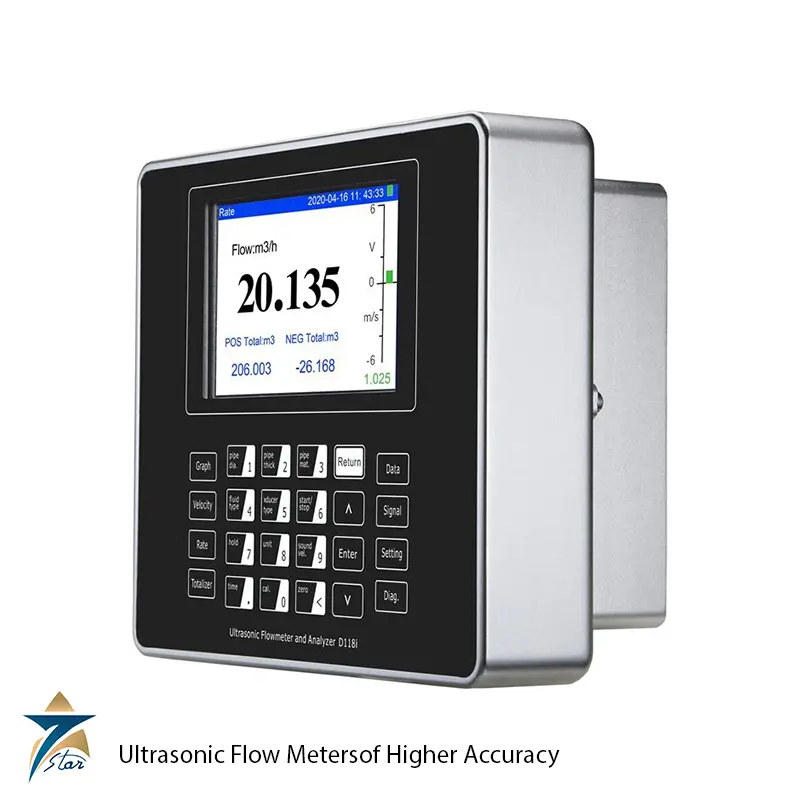
While standard ultrasonic meters are highly accurate (typically within ±1.0%), certain industries demand near-laboratory precision in a rugged, industrial format. The higher accuracy models utilize advanced signal processing algorithms and specialized transducers to push the margin of error down to ±0.5% or better.
Why it matters: These meters are crucial for sectors where slight deviations can cause major quality issues. Pharmaceutical manufacturing, food and beverage processing, and precise chemical dosing systems rely on this elevated level of accuracy to ensure product consistency and regulatory compliance without ever having to break the pipeline’s sterile seal.
5. The Clamp WiFi Mounted Flow Meter
Best for: Smart Buildings, IoT Integration, and HVAC
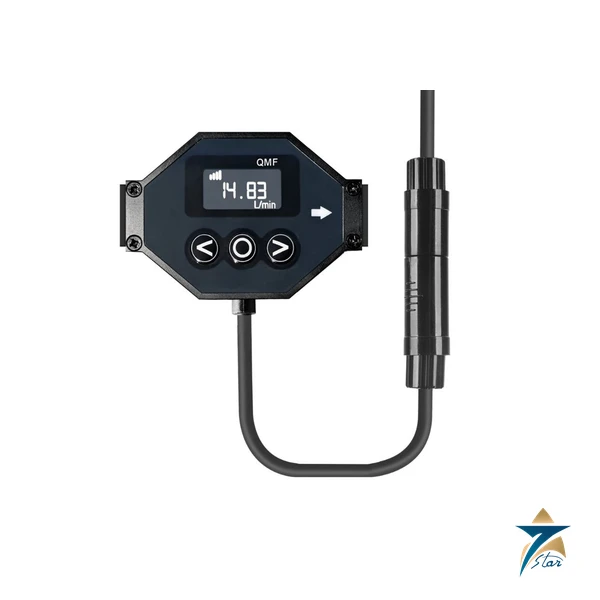
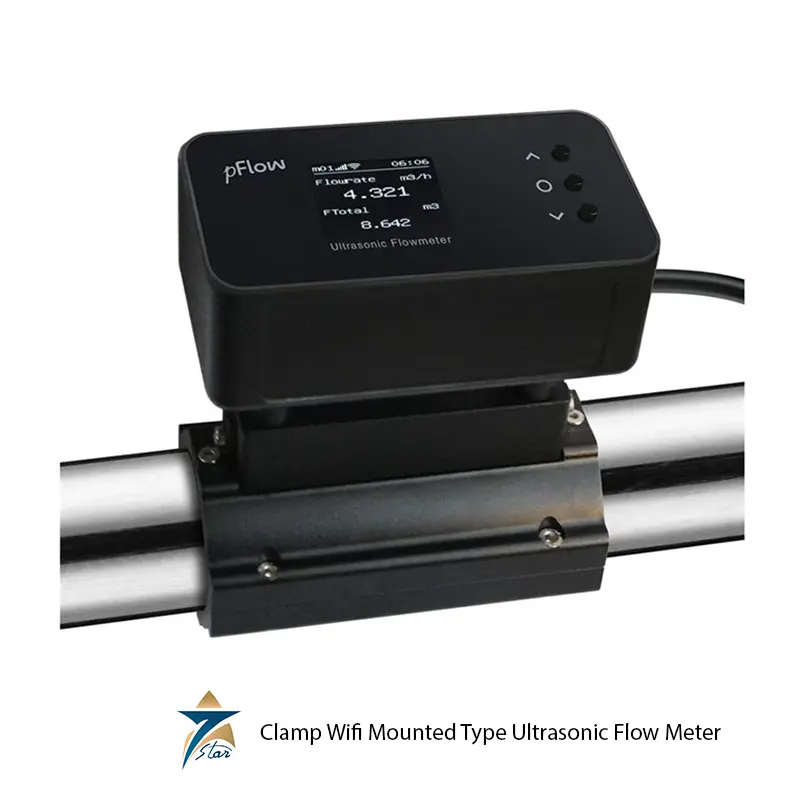
Welcome to the modern era of fluid measurement. As industries move toward the Internet of Things (IoT) and smart infrastructure, flow meters must adapt. The WiFi-mounted or “clip-on” series represents a massive leap in convenience and connectivity.
Why it matters: Designed primarily for smaller pipe diameters (DN10 to DN100), these highly compact meters feature built-in WiFi modules. Instead of running expensive wiring back to a central control room, these meters transmit real-time flow and energy data directly to a cloud dashboard or a smartphone app. Furthermore, their integrated design means they can often be installed in under 60 seconds. They are rapidly becoming the standard for Smart Building Management Systems (BMS) and district cooling (HVAC) networks.
Conclusion: Which Meter is Right for You?
The transition to non-intrusive ultrasonic measurement is a smart move for any modern facility, but selecting the correct meter dictates the success of your investment.
- Need to monitor a massive water main? Look at Multipath.
- Need to audit your HVAC chillers? Grab a Handheld unit.
- Upgrading a smart commercial building? The WiFi Clamp-on is your best bet.
If you are unsure which technology matches your pipe size, fluid type, and integration needs, expert guidance is crucial. Reach out to the technical engineering team at Seven Star LLC for localized support and professional sizing to ensure you get the exact data you need, with zero operational downtime.
Do I need to cut my pipes to install these ultrasonic flow meters?
No. The models discussed in this guide primarily use “clamp-on” technology. The transducers are installed entirely on the outside of the pipe. This non-intrusive method ensures zero operational downtime, meaning you do not have to halt production or drain your systems during installation.
How accurate are ultrasonic flow meters compared to traditional inline meters?
They are highly accurate and competitive with traditional meters. Standard fixed or handheld models typically offer an accuracy of ±1.0%. For critical applications, Higher Accuracy and Multipath models can achieve ±0.5% or better, rivaling the performance of high-end electromagnetic meters.
Can a single Handheld flow meter measure different pipe sizes and materials?
Yes. Handheld ultrasonic meters are extremely versatile. By simply adjusting the transducer spacing and entering the new pipe parameters (such as diameter, thickness, and material—like PVC, carbon steel, or copper) into the device interface, a single meter can be used across various pipelines in your facility.
When should I choose a Multipath meter over a standard Fixed meter?
You should opt for a Multipath meter when dealing with very large-diameter pipelines or locations with turbulent, asymmetric fluid dynamics (such as areas immediately following pumps, valves, or 90-degree elbows). The multiple sound paths ensure a highly accurate average velocity reading even when the flow profile is irregular.
What is the main advantage of the Clamp WiFi Mounted meters?
The primary benefit is the elimination of complex and expensive data wiring. These compact meters connect directly to local networks or cloud dashboards, allowing facility managers to monitor real-time flow and energy consumption from a smartphone or remote computer. This makes them highly cost-effective for Smart Buildings and HVAC retrofits.