
Blog
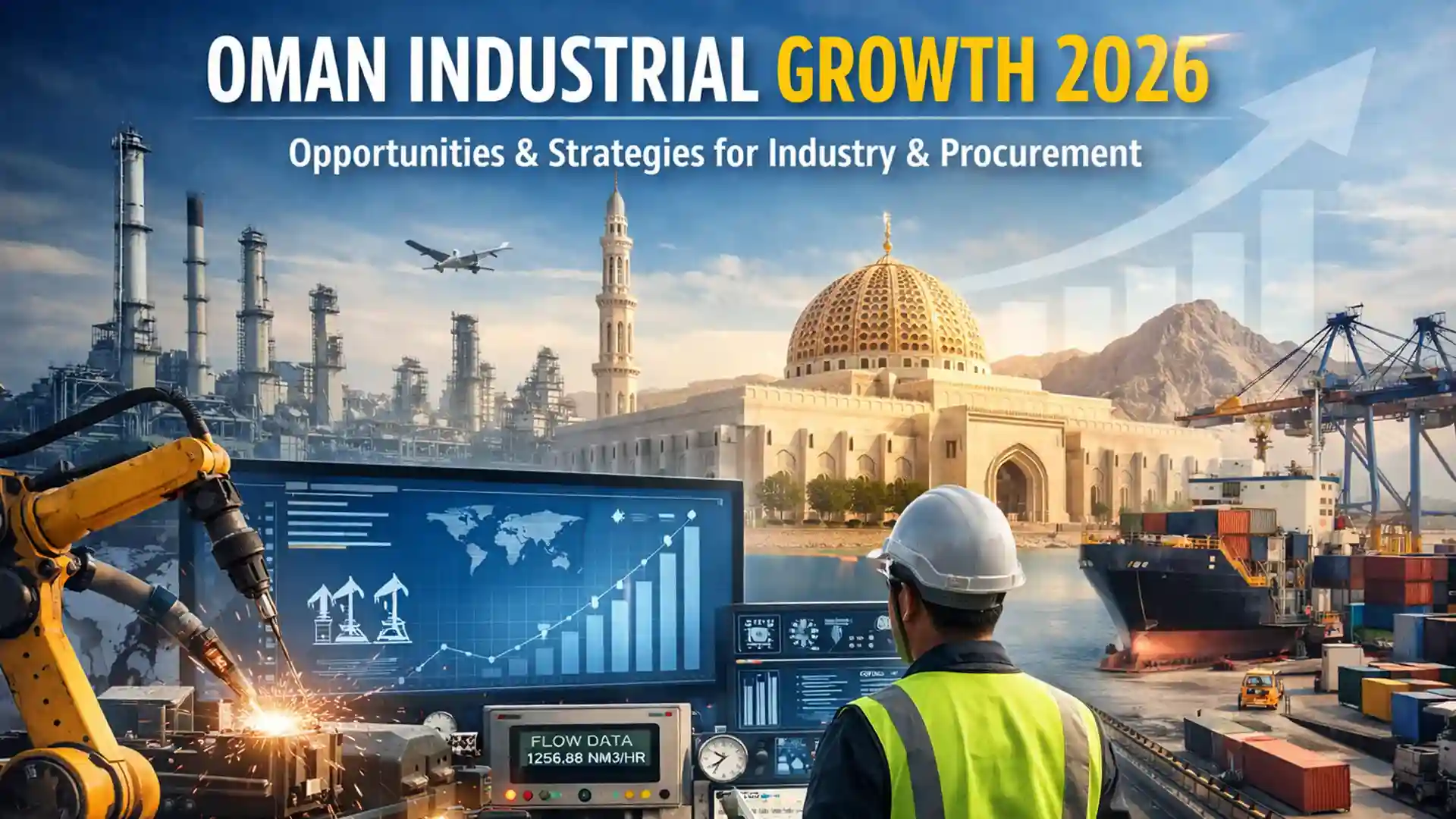






Industrial growth in 2026 represents a pivotal opportunity for businesses, investors, and procurement teams targeting the Sultanate’s expanding non-oil economy. Anchored by the implementation of the Eleventh Five-Year Development Plan (2026–2030) and aligned with Vision 2040, Oman is positioning itself as a diversified industrial hub, enhancing its business environment and creating demand across multiple strategic sectors.
This article delves into the Oman industrial growth 2026 outlook, highlighting priority sectors, investment incentives, and practical insights for industrial procurement and suppliers. It is tailored for decision-makers, industrial buyers, and companies seeking to align their sourcing and project planning with emerging market dynamics.
Oman’s economic strategy for 2026 emphasizes sustainable expansion beyond hydrocarbons through legislative, regulatory, and structural reforms. The Eleventh Five-Year Development Plan — the implementation phase of Vision 2040 — targets a 4 % annual GDP growth rate supported by strategic investments in key sectors such as manufacturing, tourism, and the digital economy.
The growth of non-oil sectors contributes increasingly to Oman’s overall economic performance, demonstrating steady diversification and enhanced financial sustainability.
The manufacturing sector is pivotal to diversification efforts and plays a central role in Oman industrial growth 2026. This expansion drives demand for industrial instrumentation, automation technologies, and control equipment — including products found in categories like Sensors & Transmitters and Automation & Control.
Manufacturing continues to benefit from investor incentives and policy frameworks designed to enhance domestic value chains and reduce reliance on imported industrial goods.
Oman’s strategic geographic position and investment in logistics infrastructure — particularly in ports such as Salalah and Duqm — reinforces its status as a regional trade hub. These developments support ongoing non-oil diversification by facilitating connectivity, supply chain efficiency, and industrial throughput.
Investments in logistics also elevate demand for systems like Flow Computers, essential in material handling and complex distribution networks.
Renewable energy initiatives — from solar cell production to green hydrogen projects — form a significant part of Oman’s sustainable industrial agenda. This sector’s expansion underscores a rise in demand for monitoring and control technologies that help integrate renewable assets into broader industrial ecosystems.
Oman’s rich mineral resources, including copper, gold, gypsum, and industrial minerals, underpin a growing mining sector that contributes to industrial diversification. Mining expansion stimulates demand for specialized industrial measurement solutions and robust instrumentation.
Agriculture and fisheries are core components of economic diversification goals, with investments targeting food security and value chain enhancements. Modern aquaculture and food production require precise instrumentation such as temperature and flow monitoring systems — aligning with offerings in Temperature Sensors.
Industrial buyers and procurement teams can leverage the Oman industrial growth 2026 landscape as a framework for strategic planning, supplier engagement, and project scheduling:
Understanding priority growth sectors allows procurement teams to plan for demand spikes in automation hardware, sensors, and process control systems. Early engagement with suppliers ensures timely deliveries and cost advantages.
Major infrastructure projects in logistics, manufacturing, and renewable energy often involve phased procurement cycles. Aligning your sourcing strategy with project milestones enhances operational continuity.
Oman’s reforms to enhance the investment environment — including streamlined foreign ownership laws and business licensing processes — provide a conducive climate for industrial procurement and supplier integration.
Free zones like Instrumentation & Industrial Product Solutions and other special economic areas offer additional incentives for long-term supplier contracts and localized deployment.
Q: What is driving Oman industrial growth 2026?
A: Growth is driven by Vision 2040 priorities and the Eleventh Five-Year Development Plan, with emphasis on diversifying the economy through manufacturing, logistics, renewable energy, and mining sectors.
Q: Which sectors are most promising for procurement opportunities?
A: Manufacturing, logistics, renewable energy, mining, and agriculture/fisheries present robust opportunities for procurement planning and supplier engagement.
Q: How can suppliers benefit from these trends?
A: Suppliers who align their solutions with priority sectors and build long-term relationships with industrial buyers are positioned to grow as demand increases.
The Oman industrial growth 2026 outlook presents a landscape rich with strategic opportunities for procurement teams, suppliers, and industrial partners. By aligning procurement strategies with key sector trends, leveraging internal incentives, and planning ahead for project cycles, organisations can position themselves for sustained success as Oman deepens its economic diversification under Vision 2040.
Understanding the growth dynamics reflected in the 2026 development plan and national diversification goals can unlock significant competitive advantages — whether through instrumentation solutions, automation products, or project-aligned supplier strategies.